All Posts By

jerfalco

I Need a Granite Rock Quarry Near Me!

rock quarry near me

Rock Quarry Near Me in Southern California

A rock quarry is a place where large deposits of rock, such as granite, limestone, or trap rock, are mined from the earth. Quarries are used to extract a variety of minerals and materials that are used in a variety of applications, including construction, landscaping, and manufacturing.

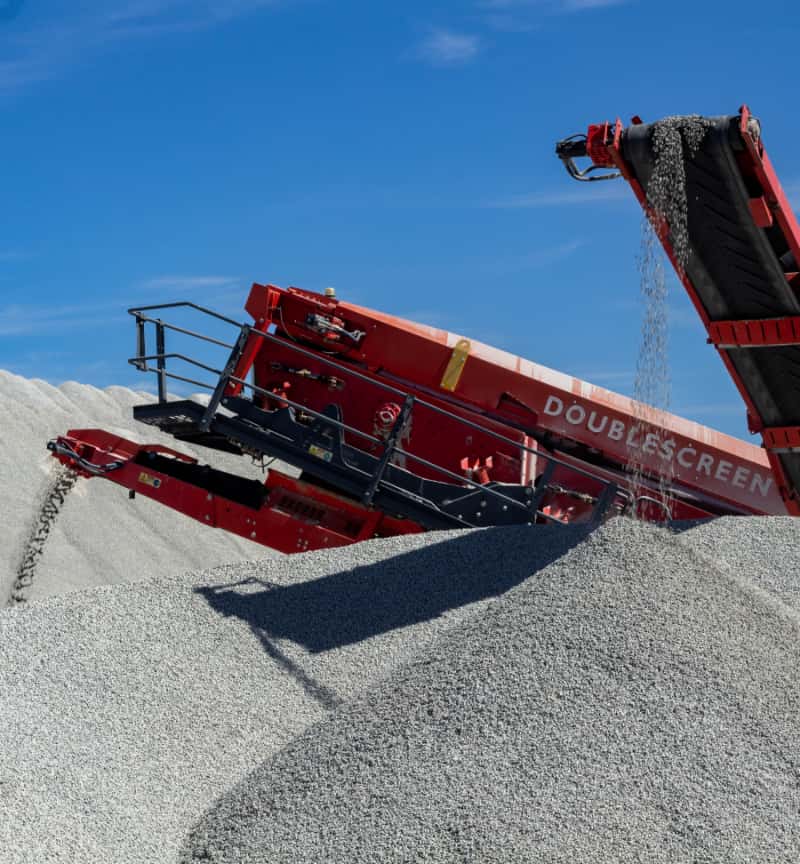
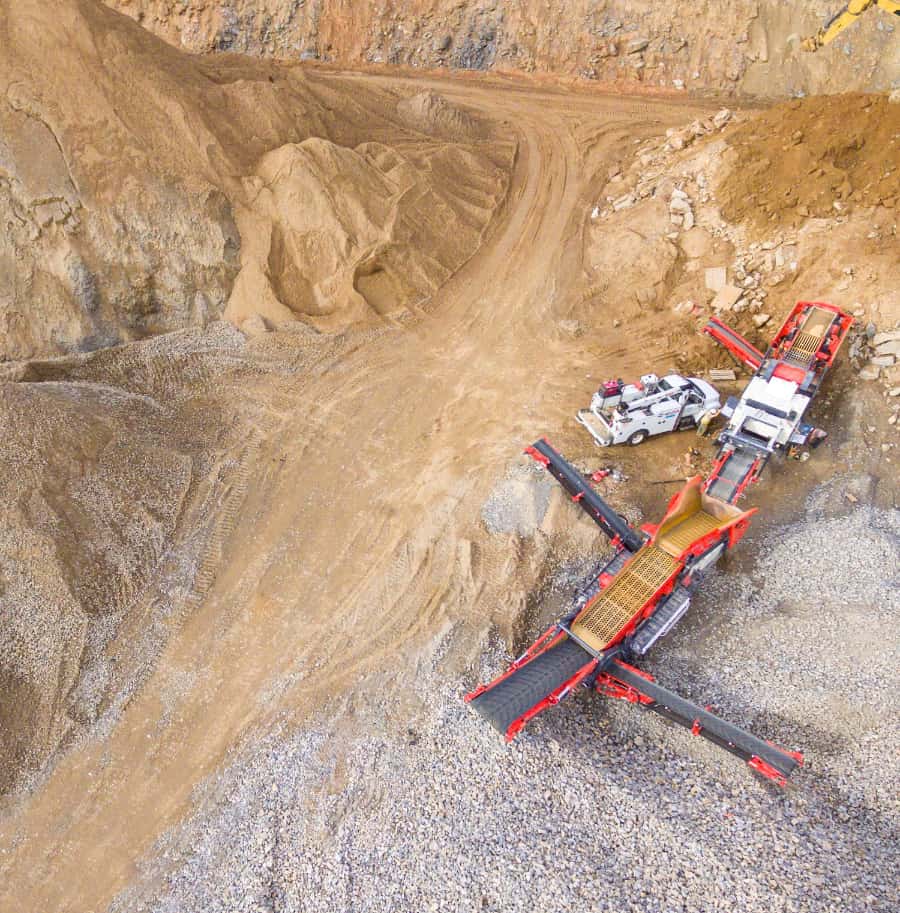
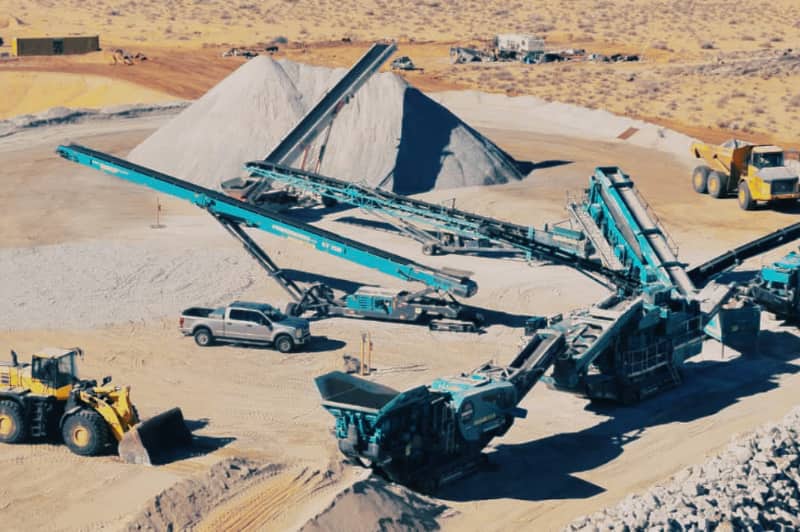
Rock quarries are typically large, open pits that are excavated to extract rock from the earth. The rock is then crushed and screened to produce a range of sizes and shapes, which are used for a variety of purposes. Quarries may also have processing facilities on site to wash, crush, and screen the rock to produce specific sizes and shapes for specific end uses.

How Do I Find a Rock Quarry Near Me?

To find a rock quarry near you, try searching online directories or check with your local government or chamber of commerce. You can also ask landscaping or construction companies in your area if they know of any rock quarries in the area.

Additionally, you can try searching online mapping tools, such as Google Maps, to find rock quarries in your area. Keep in mind that the availability of rock quarries can vary depending on where you live, and it may be necessary to travel a short distance to find one.

Do I Need a Rock Quarry Near Me for My Needs?

Rock quarries are typically used for the extraction of building materials, such as granite, sandstone, and gravel. These materials are used in a variety of construction projects, including roads, bridges, buildings, and infrastructure.

If you are planning a construction project that requires these types of materials, you may need to use a rock quarry to obtain them.

To determine if you need a rock quarry for your project, you should first assess your material needs. Consider the size and scope of your project, as well as the type of materials you will need. You should also consider the location of your project and whether a rock quarry in the area can provide the materials you need.

If you are unsure about your material needs or how to obtain the materials you need, it is a good idea to consult with a construction professional or a materials supplier. They can help you assess your project requirements and recommend the best course of action for obtaining the materials you need.

Non-Construction Needs for a Rock Quarry

Don’t own a big construction company? That’s okay, there are a few reasons why a small scale project might need to use a rock quarry:

  1. Access to materials: Depending on the location of your project, it may be more convenient or cost-effective to obtain materials from a rock quarry rather than having to transport them from a farther location.
  2. Quality of materials: Rock quarries often produce high-quality building materials that are suitable for a variety of construction projects.
  3. Quantity of materials: If you are working on a small-scale project, you may not need a large quantity of materials. A rock quarry may be able to provide the specific amount of materials you need for your project.
  4. Cost: Rock quarries may be able to offer lower prices on materials due to the volume of materials they produce. This can be especially beneficial for small scale projects with limited budgets.

It is important to note that the availability and cost of materials from a rock quarry can vary depending on the location of the quarry and the materials you need. It is a good idea to shop around and compare prices from different sources to ensure you are getting the best deal for your project.

What Are the Main Needs a Granite Rock Quarry Near Me Might Serve?

Quarries are typically located in areas with large deposits of rock, and they are often located near transportation routes, such as rail lines or highways, to facilitate the transport of the rock to its end destination. Quarries are regulated by government agencies to ensure that they are operated safely and in an environmentally responsible manner.

Granite is a hard, durable rock that is widely used in construction, landscaping, and other applications. Some common uses of granite include:

  1. Building construction: Granite is often used as a building material for walls, floors, and countertops. It is prized for its strength, durability, and attractive appearance, and it is resistant to weathering and wear.
  2. Landscaping: Granite is often used in landscaping as decorative stone, such as for walkways, patios, and retaining walls. It is also used to make decorative ornaments, such as fountains and statues.
  3. Monument and memorial construction: Granite is often used to make memorials and monuments, as it is a durable and long-lasting material that is resistant to weathering.
  4. Road construction: Granite CAB is sometimes used as a base material for roads, as it is a strong and stable material that can withstand the weight of vehicles.
  5. Railway ballast: Granite is also commonly used as railway ballast, which is the crushed stone or gravel that is placed on the surface of a railroad track bed to hold the tracks in place and provide drainage.

Need a quote for high quality granite in Southern California? Call us today:
760-760-5969 (LYNX)
.

Call us today and talk to a real person
about your construction aggregate needs.

Riprap Erosion Control

Rip Rap for erosion control in Southern California

Erosion Control Using Rip Rap

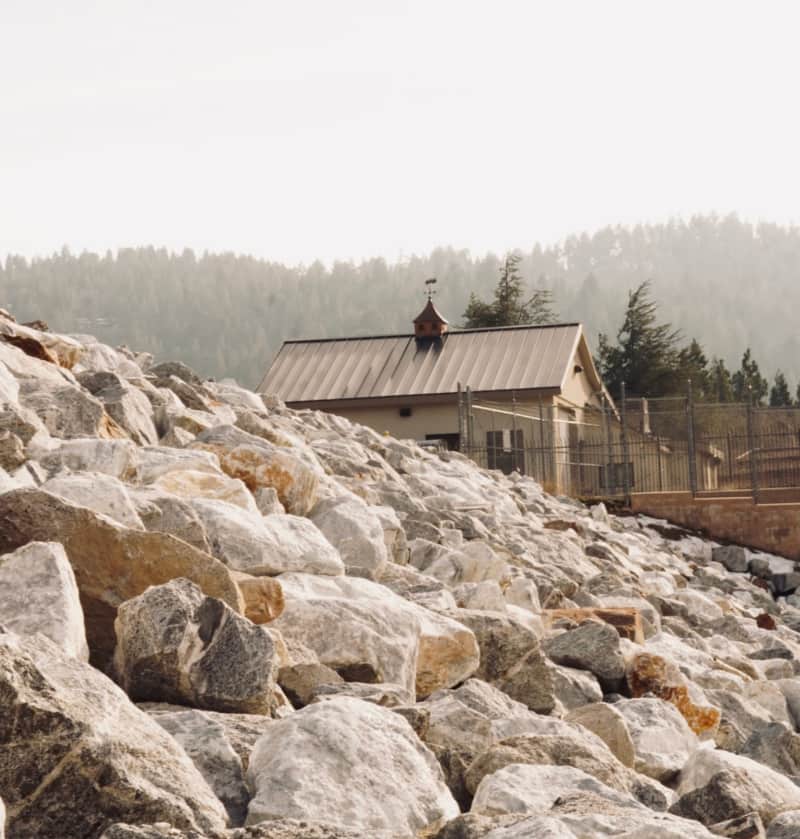
Rip rap or riprap is the term used in American English to describe rock armor placed along the foundations of bridges, shorelines, and steep slopes to protect them against scour and wave erosion, water erosion, and ice erosion. It helps dissipate the energy from rapidly flowing water and waves.

These rocks typically vary in size between 4 inches and more than 2 feet. The size of the rock required for a specific project depends, among other things, on how rapidly the water is moving and how steep the slope is.

Riprap erosion control is a long-lasting treatment with a totally natural appearance. The only downside is that animals might find it difficult to traverse the rocky material. Fortunately, this issue can be addressed by using smaller rocks or soil to fill the empty spaces between the rocks.

Riprap Erosion Control Options

Rip rap is often the best solution where a shoreline or structure is exposed to moving water on an ongoing basis. Erosion has the ability to cause severe damage to property (including bridges) and it can also wash out nearby roadways. Not only can rip rap help to limit this type of erosion damage, but it can also help to keep members of the public safe.

Examples of where rip rap can play a positive role include the following:

  • On the opposite bank where there is a bend in a river. In this case, it helps to reduce the water’s force against the riverbank.
  • Along the shoreline of a lake where it can help to reduce the erosion damage caused by wave action.
  • Next to supporting structures in channels and other types of waterways
  • Along river embankments, particularly in the vicinity of bridges

Construction Riprap

Rip rap can also be used to help stabilize those parts of a construction site where there is a high risk of erosion. Examples of these include storm pipe and culvert outlets and inlets, drains, bridges, storm drains, and similar areas where there is a very real danger of concentrated runoff.

The reason why rip rap is so effective under these circumstances is that it increases surface roughness and reduces the speed of runoff.

Riprap Rock Available in Southern California

Lynx Cat Mountain Quarry, located just outside Barstow offers various sizes of rip rap. Our crushed aggregate products, dirt and sand, and railroad ballast are high quality granite from our Southern California rock quarry.

Call us today and talk to a real person
about your construction aggregate needs.

Aggregate Base: Common Uses in Southern California

crushed stone aggregate base in southern california

The ABCs of Aggregate

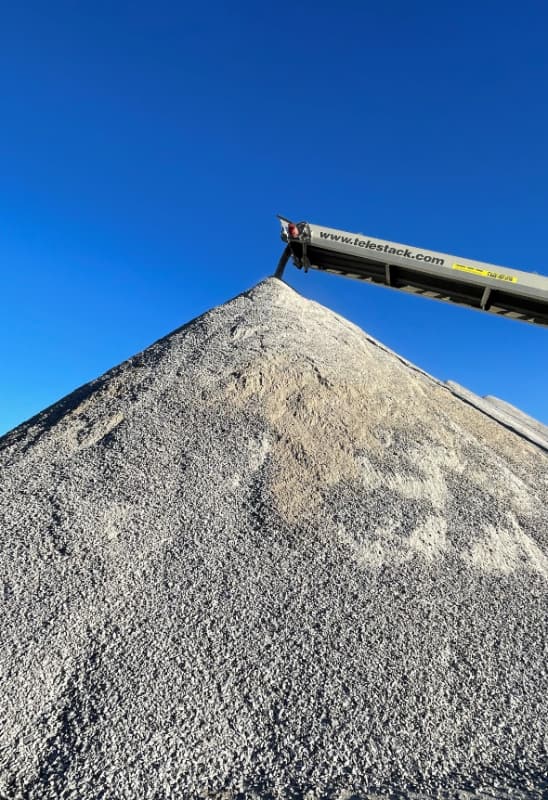
Aggregate Base Course, typically just referred to as ABC, is made from recycled asphalt, quarried rock, or concrete. It is a sub-layer material and as such it offers a supportive foundation that is typically placed under the top layers of e.g. a pavement, an asphalt roadway, under structural foundations and concrete slabs, and often also as a backfill material for underground utilities such as underground pipelines.

Aggregate Base: Designations and Sizes

The standard designations of aggregate base include (but are not limited to) ABC (Aggregate Base Course), MBC (Macadam Base Course), Dense Graded Base, Crushed Stone Base, GAB (Graded Aggregate Base), Dense Graded Base, Base, and Subbase.

The dimensions of aggregate base might differ depending on the location since each site has to comply with different requirements from the relevant governing agency.

Aggregate Base: Its Most Common Uses

Aggregate base is commonly used as a foundation for asphalt pavements, in unpaved roads and shoulders, in backfill underground pipes and other facilities, in pavement foundations made from asphalt, as part of a base that has been cement-treated, and in concrete pavement foundation.

Aggregate Base Also Has Structural Uses

When building base course or structural foundations under asphalt pavement roadways or concrete slabs, ABC is often also very useful. It can, for example, be used by first spreading it and then compacting it. The sub-base is formed by minute chipped aggregate layers such as crushed fines and dust. This is very useful in driveways and areas with heavy traffic.

Aggregate Base Also Has Many Other Applications

The following list is by no means comprehensive but should give readers a good idea of how many applications there are for aggregate base.

  • Streets, roads, and highways
  • Houses
  • Other types of buildings, including residential and commercial
  • Structures made of concrete such as bridges, parking ramps, dams, and wastewater treatment plants
  • Track beds for railroads
  • Erosion control
  • Water filtration and purification
  • Landscaping
  • As a soil additive in agriculture
  • In structures used for water drainage
  • Snow and ice control
  • Ball diamond surfacing
  • Site reclamation
  • Livestock bedding

What Is Dense Aggregate Base?

This term refers to aggregates that have various sizes. Because these have very few voids and contain stones, they are able to create a dense layer. As such they are very useful when building pavements and other constructions.

Lynx Cat Mountain Quarry is a rock quarry in Southern California serving your granite quarry n

Call us today and talk to a real person
about your construction aggregate needs.

Asphalt Aggregate: What Is It?

asphalt aggregate in southern california

Asphalt Aggregate in Southern California

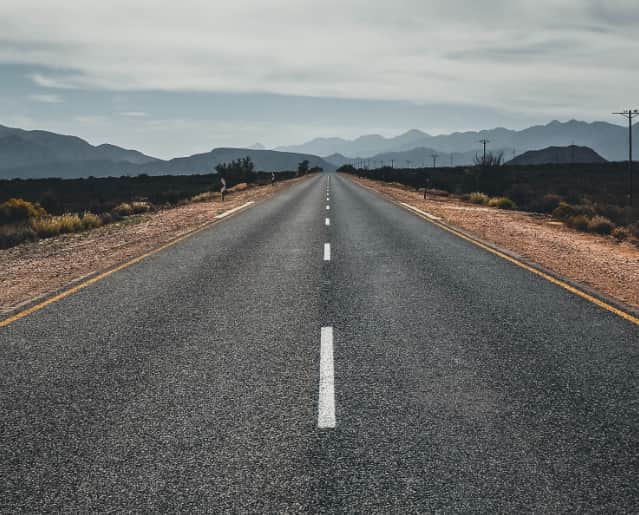
Roads are a complex system in and of themselves, but very few are familiar with the intricate process behind creating safe and accessible roadway systems. So, what is asphalt aggregate and why is it important?

What Is Asphalt Aggregate?

Asphalt aggregate is a complex mixture of minerals with the addition of asphalt cement. The word aggregate is a catch-all term for minerals such as sand, gravel, or crushed rock. Put simply, asphalt aggregate is a type of aggregate. Regarding construction, it is necessary as a base material and a key component for strengthening new and impaired roadways.

Where Does Aggregate come from?

Aggregate is often sourced from the byproduct of manufacturing industries. It can also be sourced naturally. Natural mineral deposits exist in mines and quarries, where they are routinely blasted or dug up. This process can yield a variety of different minerals. Therefore, when it comes to asphalt construction, the following must be considered to ensure quality:

  • Size
  • Particle shape
  • Surface texture
  • Absorption
  • Stripping

To create proper pavement material, the aggregate must be tested for a preferred set of physical and chemical properties. This is to avoid stripping, which can destroy the integrity of the road and make driving dangerous. Additionally, the aggregate must also bind well to the cement mixture. Meaning, if a reactive mineral exists in the aggregate, it can cause a chemical reaction with the cement mixture that can cause cracking or spalling.

How Asphalt Aggregate Is Made

There are several layers to a road, thus the manufacturing process for paving aggregate involves several industries, a refining process, and the distribution of several resources to create a complex roadway material. The asphalt itself is created and heated in a plant. It is generally created as a highly formidable product with some level of resistance to pressure from vehicles.

There are many versions of asphalt, depending on what it’s needed for. A cold mix, for example, is infused with water, bitumen, or some other binding agent to make the aggregate malleable during refinement. This process is common for rarely used roads, such as countryside roadways, while warm mixes are more sustainable than hot mixes.

I you need aggregate products in Southern California, our quarry in Barstow, California, has high quality granite rock available for construction and private needs.

Call us today and talk to a real person
about your construction aggregate needs.

Rock Drainage Ditch Ins and Outs

drainage ditch rock

Lyn

Rocks for Drainage

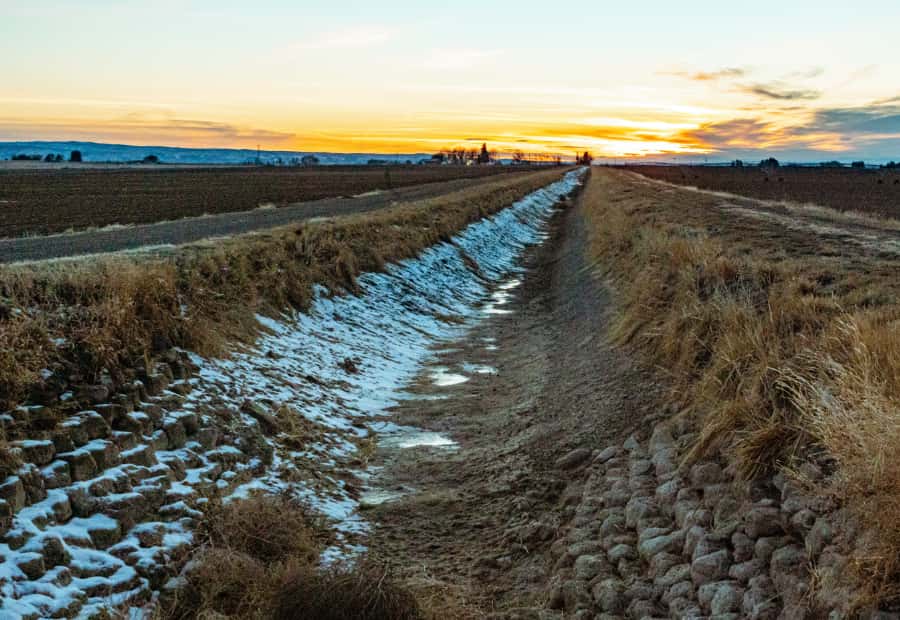
Most of us know what a drainage ditch is. Its purpose is to carry water from where it’s not wanted to where it can do less harm. A rock drainage ditch refers to when one uses rocks in a drainage ditch to assist with the water flow, to prevent erosion alongside roads and driveways, and to help prevent erosion on lots with steep slopes.

Selecting the right type of rock is vital if you want to ensure that your drainage system will do its job properly. Rock drainage ditches can simply be purpose-driven but they can also be decorative to blend in with your landscaping features.

What Is Drain Rock and How Does One Use It?

Drainage rock has been a vital tool in the hands of landscape architects for a long time, yet it remains one of the most effective and simplest. Instead of being of a particular shape or size, drain rock is typically identified by its usage – which in this case is to help with water drainage. The reason why it works so well is that it is a porous gravel material that has been specifically created to control the flow of water in any type of drain.

Typical Features of Drain Rock

The stone that makes up drain rock are can be bought in a variety of different sizes. Examples include 3/8, 3/4, 7/8, and 1.5-inch. The smallest size (3/8 of an inch) is often referred to as pea gravel.

A general rule of thumb is that the steeper the slope, the bigger the stones should be. This is necessary because smaller stones will not be able to withstand the stronger force of the water and they might well tumble down the hillside with the first flow of storm water you get.

Depending on what they will be used for and the builder’s preferences, drain rock stones are typically available in smooth, jagged, or rough textures. Apart from that, drain rock is also for sale in a surprisingly large number of different colors – from black to white to various shades of blueish gray. The color of the rock is often determined by the location from where it originates.

Our Rock Quarry in Barstow Southern California

Lynx Cat Mountain Quarry offers high-quality granite rock and aggregate stone products. We specialize in providing CalTrans and similar construction type projects with everything necessary for bigger endeavors. But we can help with any construction or landscaping need. Call our team today to figure out if we can supply the aggregate product you need.

Call us today and talk to a real person
about your construction aggregate needs.

Paving Base: Using Aggregate Gravel

paver base aggregates class II base barstow hinkley base crushed aggregate base CAB

A properly landscaped yard is part of making your home a beautiful oasis. Having the right materials will make creating the perfect desired look easier. Paving is a great way to enhance any exterior area of your home.

While selecting the paver color, material, and shape is important to the outdoor design, the base used under the paver material is critical. A strong, stable support base is the key to a long-lasting driveway, walkway, or outdoor patio that does not have any defects, cracks, or allow for paver shifting that can create tripping hazards.

The Right Paver Base Gravel

Granite aggregate is a great choice for a paving base—perfect for residential patios and driveway paver installations. This mix combines types of stones that are crushed and blended with dust. When mixed, the aggregate is very strong which is necessary for a paver base.

It is easy to work with and allows for adequate water drainage. Generally, it is recommended that a ¾” size be used for paver bases. Granite aggregate should be obtained from a certified quarry that specializes in aggregate mixing.

Paver Base Layers

Different materials can be used as a substrate for the base. These layers would be compacted to create a smooth level surface. There are three components to the base system underneath the pavers: the subgrade layer, the sub-base layer, and the base layer.

The subgrade layer is the bottom-most layer of the system. This is the ground soil at the area’s base to receive pavers. It can consist of clay, rock, or sand. The type of soil will depend on the geographical location of the property.

Next is the sub-base layer placed on top of the subgrade layer which is generally comprised of ¾” crushed gravel pieces that interlock with each other to create a sturdy tier to support the pavers.

Last is the paver base which can also be called the bedding layer. This is the uppermost portion that retains the substance pavers are installed into. There are several options for the materials that can be used in this part.

Getting Gravel for Paving Base in Southern California

In the end, the materials chosen for your paver base should create a durable and solid substrate to support your paved area. This will keep your pavers looking beautiful and functioning for years to come.

At Lynx Cat Mountain Quarry, we are ready to answer any questions on the size and type of aggregate best fits your needs.

Call us today and talk to a real person
about your construction aggregate needs.

How Is Stone Dust Used?

Stone Dust at Southern CA quarry

Stone Dust at Lynx Cat Rock Quarry in Southern California

Stone dust is a sand-like material that is a by-product of stone-crushing processes. This material has many uses mainly because of its similarity to natural river sand. It has been shown that replacing fine aggregate with stone dust increases the compressiveness of concrete.

Where Does Stone Dust Come From?

Stone dust, also called quarry or rock dust, is collected at rock quarries using a screen that filters the large pieces above it. The screen lets the stone dust fall through, which is then graded based on the size of the stones. In appearance, you can think of this material as the most miniature form of stone.

How Is Stone Dust Used?

Stone dust has many uses. It’s most commonly used as a sand replacement. It however has properties that makes it superior to sand in some instances. Some of its most common uses include the following:

Stone Dust as Base for Pavers

This is one of the most common uses of stone dust. Many contractors report that the material is an excellent alternative to concrete sand for laying pavers. Stone dust contains super fine particles. When compacted, it sets up to create a waterproof barrier under pavers. In addition, the fine nature of the quarry dust stops the blocks from moving. It can also be quite useful when building patios of natural stone.

Stone Dust as Replacement for Gravel

Stone dust is sometimes used in landscaping as a gravel replacement. Landscapes compact the dust, so it creates a sturdy walkway or driveway. There’s no need to pour concrete during this process. The dust also has

Stone Dust as Remineralization of Croplands

Some organic gardeners use stone dust in their fields. While it may not provide a lot of phosphorous, nitrogen, or sulfur, and it’s not really a fertilizer, stone dust supplies a significant amount of trace minerals. Because of its fine nature, it has a larger surface area, allowing water to efficiently dissolve minerals and provide them to plants. Stone dust from basalt and granite is considered higher in trace minerals.

Compared to sand and other options, stone/quarry dust is the cheaper option. For most people, this alone gives it an advantage over other materials, allowing them to save money on landscaping and hardscaping projects. If you are looking for aggregate products in Southern California and the surrounding areas, call us today for a quote.

Call us today and talk to a real person
about your construction aggregate needs.

AEC Community Celebrates Tony Tavares as Director of Caltrans!

caltrans construction aggregates

September 15th 2022

Nearly 300 AEC community leaders from throughout California turned out at the stunning City Club of Los Angeles September 15th 2022 to celebrate Governor Gavin Newsom’s appointment of Tony Tavares as the Director of Caltrans. The event was hosted by 19 Architecture, Engineering, Construction, and Workforce Organizations with the support of numerous sponsors.

The event showcases one of the reasons why California is leading the way, globally, in demonstrating the value, strength, and power of our diverse communities and businesses.

Lynx Cat Mountain Quarry Operations, LLC’s owner, Gina Zatica, had the pleasure of speaking the reception.

Gina spoke about the projects Lynx Cat has been delivering rock to, as well as our construction aggregate products. She addressed a unique challenge faced by her quarry and many other small businesses that support Caltrans, specifically that her business is located in a remote, non-urban setting away from the highly-visible business in LA, San Diego, San Francisco, and Sacramento.

Gina thanked Tony for being an advocate for small, minority, and LGBT businesses, even in less-visible locations. She thanked him on his commitment to moving California and the Nation forward.

For more information about Lynx Cat Rock Quarry near Barstow, CA, call us today: 760-760-5969 (LYNX).
Call us today and talk to a real person
about your construction aggregate needs.

Construction Sand in Barstow California

Construction sand operation in barstow ca

Quality Southern California Construction Sand

Sand is the building block of construction.

And the construction industry is one of the biggest in the world. Construction sand is an essential element with over 50 billion tons used annually.

Sand is a crucial aspect of mortar and concrete, making it better by adding density. This strengthens structures and helps them resist atmospheric conditions that may weaken them.

Similarly, using high-quality sand adds stability to construction materials. As you probably know, not all sands have the same quality or are as efficient. As a homeowner or contractor, we need to look at which type of sand is best for your project. Our granite aggregate options may even fit your particular needs.

Below are the most popular types of sand.

River Sand

River sand is the most popular and preferred for construction projects. The naturally occurring sand is harvested from riverbeds and banks, and unlike artificial sand, it’s believed to produce a stronger base and offer a smoother finish.

It’s famous for its strength, shape, and size, enabling it to absorb moisture better than other types of sand. River sand shouldn’t be confused with desert or beach sand, which are not recommended for construction projects.

Industrial Sand

A popular alternative in building and construction projects, industrial sand (high purity silica) comes in controlled sizing, helping it provide bend strength and adding density to mixtures. Industrial sand makes sealants, caulks, and epoxy-compounds corrosion and weather resistant.

Utility Sand

This is a product of crushing high-quality industrial quarts into bit-sized shapes. As a product of crushed aggregate rocks, it has a coarse texture and density that allows it to be an ideal base material for concrete mixtures. Utility sand is packed with naturally occurring minerals that add to the stability and durability qualities it renders to structures.

Masonry Sand

As the name suggests, this sand is typically used by masons to create mortar to lay bricks, blocks, stones, and plastering. However, because of how fine it is, it’s not the best for structural cement mixes.

Concrete Sand

This is one of the most affordable types of sand and is made from crushed granite, limestone, or gneiss. Its granules are angular, making it a great option for concrete mixtures. Concrete sand is also excellent for building bedding pipes.

Rock Quarry in Barstow California: Sand Options

As part of our Southern California quarry mining efforts and to reduce wastage and conserve the environment, we also create sands ideal for different building and construction projects. Get in touch with our team if you’re looking for a reliable supplier of sustainably harvested construction sand.

Call us today and talk to a real person
about your construction aggregate needs.

Rock Quarry in Barstow California: Need Rock?

Rock Quarry in Barstow California

Rock Quarry in Barstow California

You need rock? We got it. But maybe your question is bigger …. What kind of rock? Where does this rock come from? What can I use it for? Do you have enough for my large-scale construction needs? If you are looking for a rock quarry in Barstow, California, Lynx Cat granite quarry in California is here. Let us tell you a little about our quarry and some of the basics of what you can find here.

Barstow Rock Quarry Explained

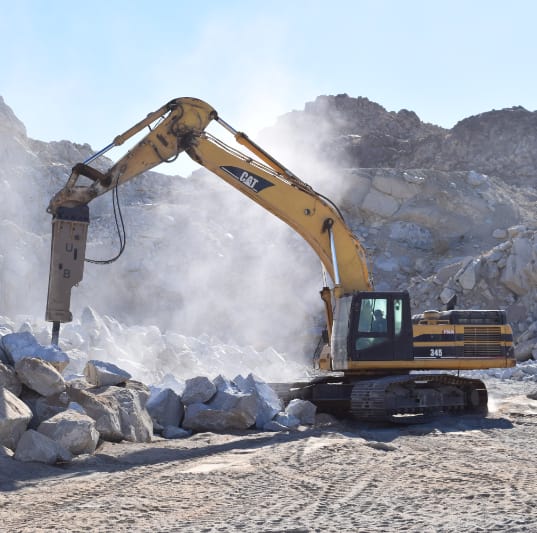
A granite rock quarry is an open pit mine where miners excavate boulders of dimension stone that are cut using industrial machinery to make construction materials that range from drainage rock to ballast to construction sands to even decorative rocks.

Typically speaking, there are different categories of quarries, including:

  • Hard rock
  • Natural sand and gravel
  • Limestone
  • Sandstone (sand & building stone)
  • Marine/ocean

A granite rock quarry falls under the first category. The most significant differences between these are the types of materials excavated. As well, the method of extracting these substances differs.

Granite is one of the hardest stones available, which is why the most effective method of mining is by blasting the rocks. While other methods such as wedging can work in a granite quarry, the cost of extracting granite would be prohibitively high and the process would be tough, to say the least.

People are often surprised by the various needs rocks from quarries fulfill. Really, our economy is tied to the rocks that come from these open pits. Quarrying produces materials that make some of the most essential items in society. These include:

  • Construction materials to build roads
  • Foundational items for railroads and skyscrapers
  • Eco-friendly material to curb erosion
  • And so much more

Products From Our Granite Rock Quarry in Barstow, California

Quarrying is a resource and labor-intensive undertaking. It also produces different by-products, which we re-purpose to make a variety of products to meet your construction needs. Apart from our granite products, we also procure the following:

Aggregate and Crushed Aggregate Base

Our aggregate products come in different sizes and are ideal for varying construction needs. Similarly, these products are excellent when used as stabilizers and reinforcers in concrete and cement mixtures. Aggregate information here.

Ballast and Sub Ballast

Whether you’re a railroad builder looking for the best quality ballast to lay rail sleepers or a sub-ballast for landscaping or driveways, we have products in suitable sizes and shapes for your needs. Railroad ballast information here.

Rip Rap

Today more than ever, society is becoming increasingly conscious of protecting the environment. Rip rap is essential as it not only adds character to designs it also plays a crucial role in preventing soil erosion, ensuring the integrity and increasing the durability of structures. Similarly, it dissipates the strength of water if used on waterfronts. Get riprap information here.

Decorative Rock and Boulders

Landscaping projects come in different shapes and sizes. When considering creative designs, you must get a supplier who understands the decorative landscaping scene. As we excavate granite stones, we also extract decorative rocks and boulders with landscaping in mind. Decorative rock information here.

Landscape Rock

While you can make most rocks work in landscaping projects, we know what it takes to make a landscaping project stand out. Our range of landscaping rocks is extracted with landscapers in mind to ensure you get the best stone for your project. Large-scale landscape rock information here.

Fill Dirt and Screened Fill Dirt

Our fill dirt is ideal if you want to fill holes in the ground or change a property’s grade or elevation. On the other hand, if your landscaping project involves planting flowers, decorative trees, or grass, we also have screened fill dirt. Screened fill dirt is free from debris and rocks, making it ideal for plants. Find fill dirt options here.

Regardless of the type of quarry product you’re looking for, we have something for every project.

Call us today and talk to a real person
about your construction aggregate needs.