All Posts By

jerfalco

What Is 3/4 Crushed Rock Used For?

Crushed Aggregate Base - 5

A Contractor’s Guide

If you’ve ever priced out a project and stared at a materials list wondering whether to spec 3/8 or 3/4 crushed rock — you’re not alone. It’s one of the most common calls we get at the quarry, and it’s worth getting right before the trucks roll.

Here’s a practical breakdown of what 3/4 crushed rock is, where it earns its keep, and where a different product might serve you better.

What Is 3/4 Crushed Rock?

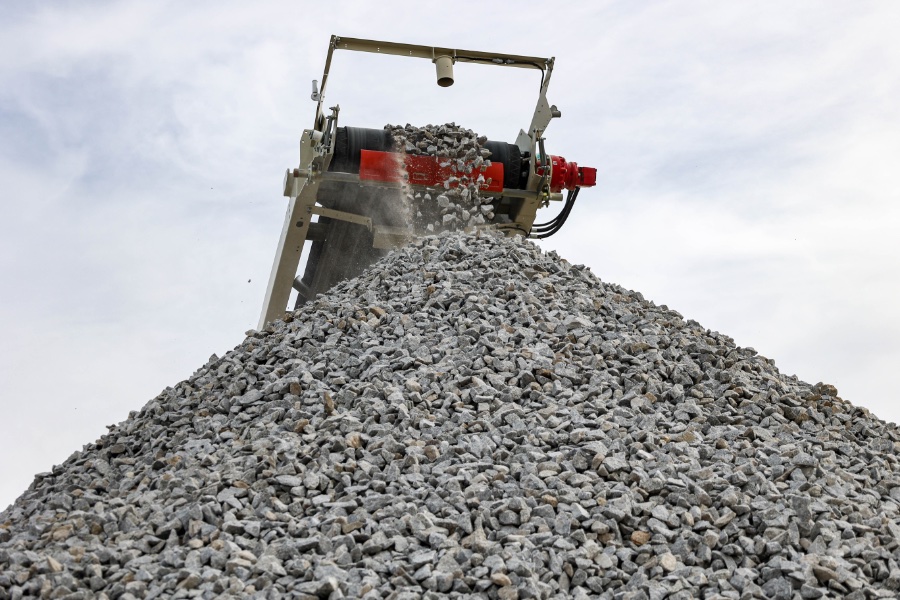
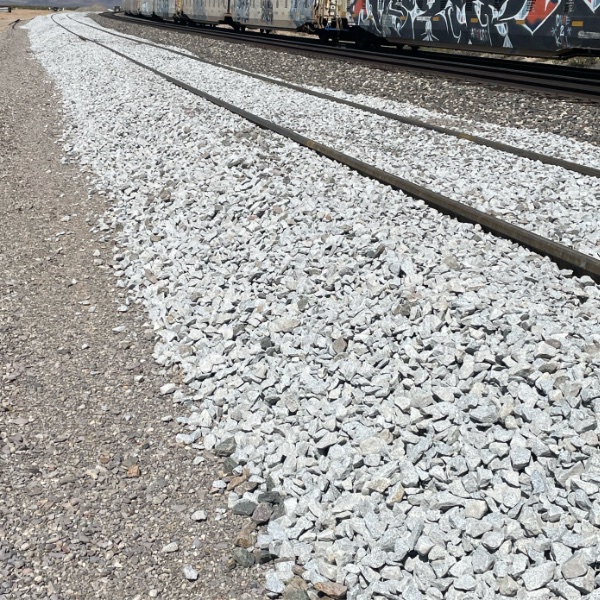
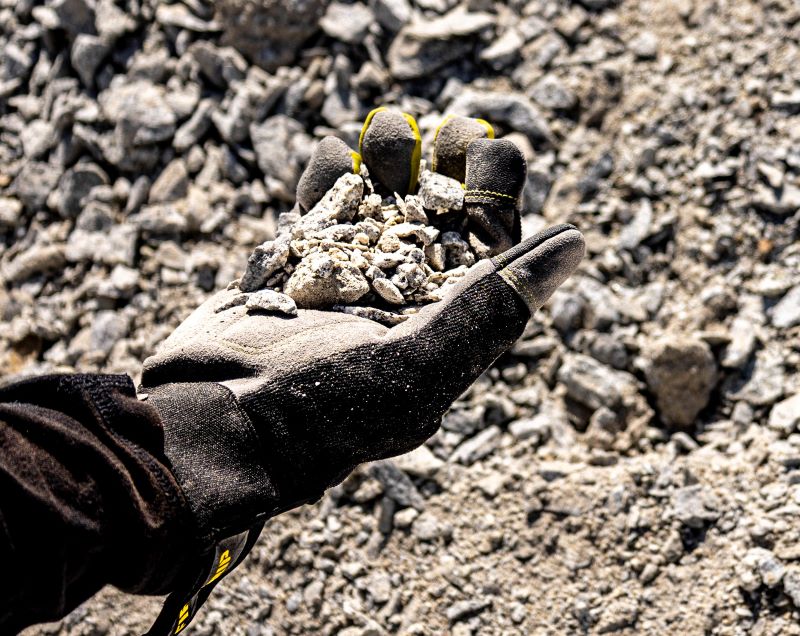
Three-quarter crushed rock — sometimes called 3/4-inch aggregate or 3/4 crushed stone — is angular crushed granite that has been screened to pass through a 3/4-inch opening. Unlike gravel, which is rounded and smooth from natural weathering, crushed rock has sharp, irregular edges. That angularity matters more than most people realize.

When you compact angular crushed rock, those jagged edges lock together. The result is a stable, interlocking matrix that resists shifting under load. That’s the mechanical advantage you’re paying for.

The Most Common Uses for 3/4 Crushed Rock

Drainage applications are where 3/4 crushed rock really shines. The particle size creates enough void space between stones to allow water to move through freely, which is exactly what you need under French drains, around utility trenches, behind retaining walls, and beneath permeable hardscapes. If drainage is part of your design problem, 3/4 is usually the right answer.

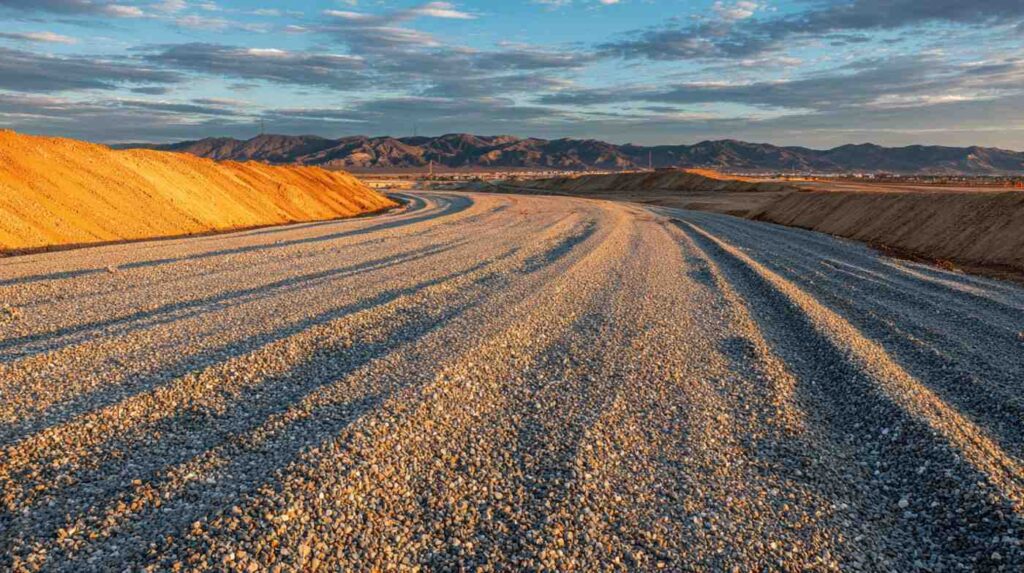
Base layers for heavy-load areas — parking lots, equipment yards, unpaved industrial surfaces — benefit from 3/4 as a structural fill beneath the finished surface or Class II base layer. The size handles compaction loads well and doesn’t punch through soft subgrade the way finer material sometimes can.

Pipe bedding and trench backfill often call for 3/4 crushed rock specifically because it cushions the pipe, doesn’t shift during settling, and provides positive drainage around the pipe zone. Many Caltrans and municipal specs will call out this size by name.

Erosion control on slopes and channels where rip rap is overkill but finer material would wash out — 3/4 crushed rock can function as a cost-effective armor layer for moderate flow velocities and shallow grades.

Concrete mix aggregate in certain structural and non-structural applications calls for 3/4 as the coarse aggregate component. It’s within the typical range for standard mix designs and provides good bond strength with cement paste.

Southern California CAB - 6

When 3/4 Is Not the Right Call

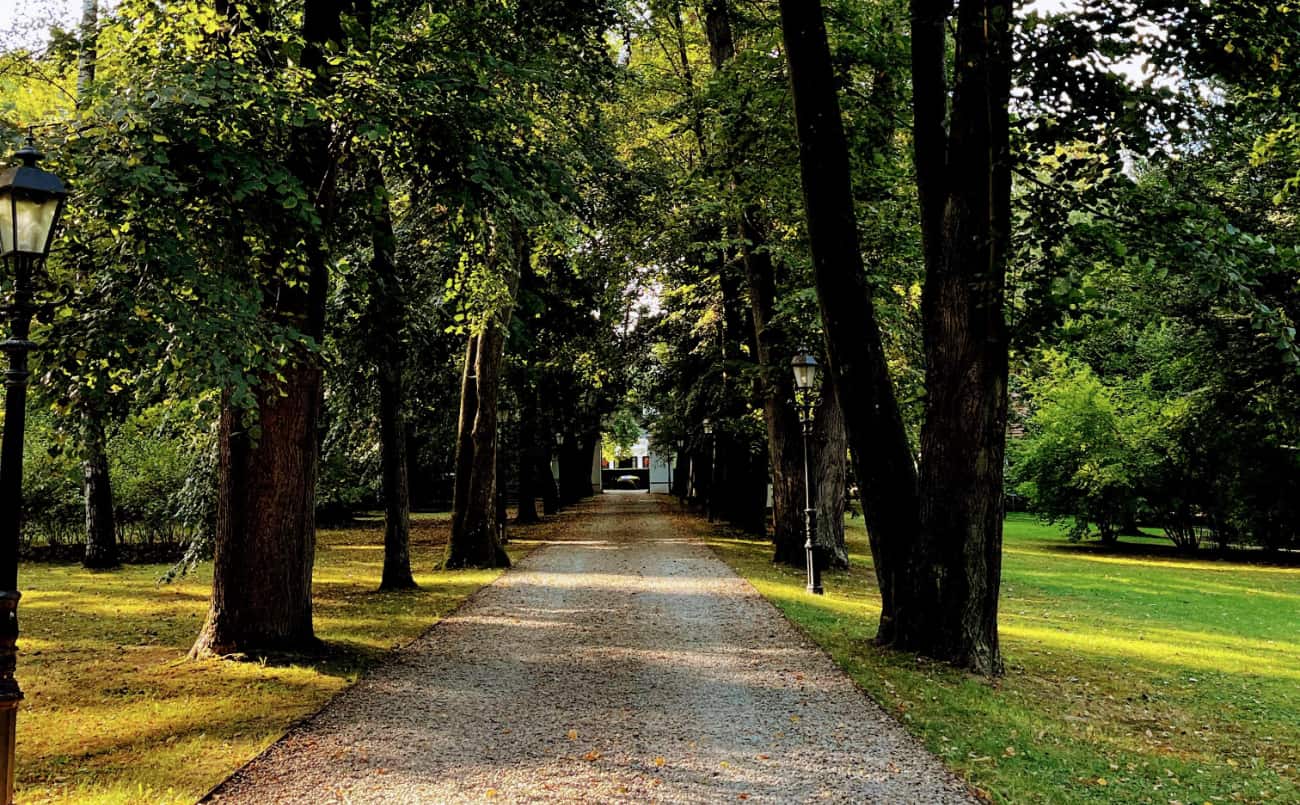
Foot traffic surfaces and pathways — 3/4 is uncomfortable underfoot and tends to scatter. If someone’s walking on it, you want decomposed granite or crusher fines (often called 3/8 minus or stone dust), which compact to a firm, walkable surface.

Under pavers or flagstone — the void space that makes 3/4 great for drainage makes it a poor bedding material for anything requiring a flat, stable setting plane. Use Class II base or a clean concrete sand for that application.

Fine grading or tight utility work — the particle size can make precise grading difficult. Switch to a smaller aggregate or crusher fines where accuracy matters more than drainage.

3/4 vs. 3/8: The Practical Difference

The question usually comes down to drainage needs versus surface finish. Three-eighths crushed rock compacts tighter, has less void space, and gives a smoother surface texture — good for driveways, pathways, and thinner base applications. Three-quarters drains better, handles heavier loads, and is the go-to for underground or structural drainage situations.

When in doubt: if water management is part of the design, spec 3/4. If surface appearance or compaction density is the priority, consider 3/8 or Class II base.

Estimating How Much You Need

A rough rule of thumb for coverage at a 4-inch depth: one ton of 3/4 crushed rock covers approximately 65–70 square feet. For a 6-inch depth, plan on roughly 45–50 square feet per ton. These numbers will vary slightly depending on your compaction rate and the density of the specific granite you’re sourcing.

If you’re bidding a project in the high desert — Barstow, Fort Irwin, China Lake, the Mojave corridor — give us the square footage and target depth and we’ll get you a quote the same day.

Where to Get 3/4 Crushed Rock in Southern California

Not all crushed rock is equal. Granite from the high desert tends to be exceptionally hard and clean — low absorption, high durability, and it holds up well under the temperature swings the desert throws at it. That hardness matters for load-bearing applications where softer aggregate can break down over time under traffic and freeze-thaw cycles.

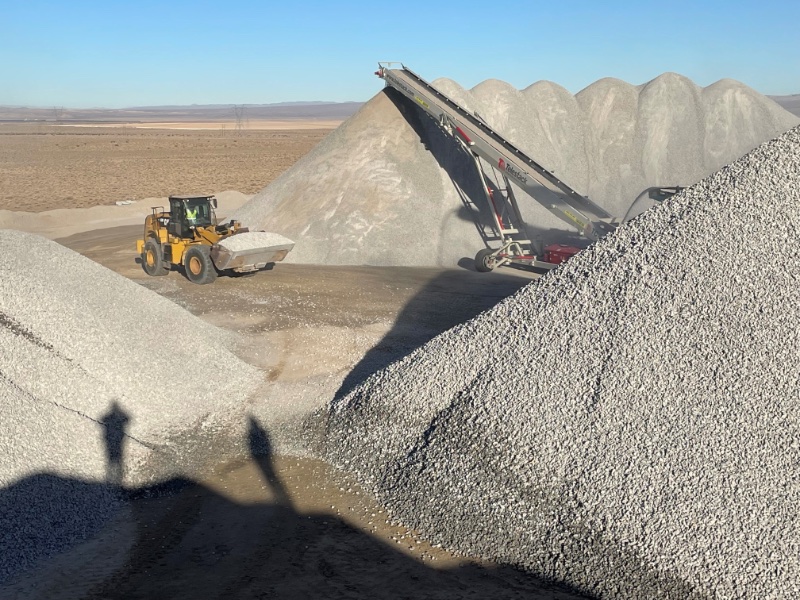
Lynx Cat Mountain Quarry produces 3/4 crushed granite near Barstow and supplies contractors throughout the Southern California high desert. We stock it, we haul it, and our people actually answer the phone on bid day.

Call us at 760-760-5969 or email quotes@lcmquarry.com to get a quote for your next project.

Do I Need Class II Base?

class II base barstow hinkley base crushed aggregate base CAB Best rock quarry AR Rock Vulcan Materials

How Much Do You Need and How Do You Spec It Right?

Class II Aggregate Base is one of the most ordered products at any quarry serving construction in California — and also one of the most frequently under-specified on smaller projects. Get the compaction rate wrong, or order short, and you’re looking at a second delivery and a delayed pour.

This article covers the practical side of working with Class II base: what it is, how to estimate quantity, what compaction to expect, and when it’s the right product versus when something else would serve you better.

What Is Class II Base?

Class II Aggregate Base (also called CAB or Class II AB) is a crushed aggregate that conforms to Caltrans Standard Specification Section 26. In plain terms: it’s a well-graded crushed rock blend — typically 3/4-inch minus — that includes a controlled percentage of fines. Those fines are what give Class II its compaction behavior. When properly moisture-conditioned and compacted, the fine particles fill the voids between larger pieces and the whole mass densifies into a stable, load-bearing layer.

This is what goes under roads, driveways, parking lots, building slabs, concrete flatwork, and most other paved or semi-paved surfaces in California. It’s a Caltrans-compliant product, which matters on public projects and on private jobs where an inspector is involved.

Southern California Aggregate class II base barstow hinkley base crushed aggregate base CAB

How Much Class II Base Do You Need?

The standard formula:

Tons needed = (Length × Width × Depth in feet × Unit weight) ÷ 2,000

For Class II granite aggregate, the typical compacted unit weight is around 130–135 lbs per cubic foot. However, you’re ordering in loose volume and it will compact down — typically 15–20% compaction factor depending on your lift thickness and equipment.

As a practical rule of thumb:

  • At a 4-inch compacted depth: approximately 55–60 square feet per ton
  • At a 6-inch compacted depth: approximately 36–40 square feet per ton
  • At a 8-inch compacted depth: approximately 27–30 square feet per ton

Always add 10–15% overage to your order. Subgrade irregularities, edge waste, and the difference between loose and compacted volume will eat into your numbers faster than expected, especially on larger pads.

Example: A 10,000 sq ft parking lot at 6-inch compacted Class II base needs roughly 250–280 tons before overage. Call it 300 tons to be safe.

Compaction Requirements

Caltrans specifies 95% relative compaction for Class II base under most roadway applications. For private projects, your project engineer may call out 90% or 95% depending on the loading scenario.

A few practical notes on hitting those numbers:

Moisture content matters. Class II compacts best near its optimum moisture content — typically 6–9% for most granite-based material. Too dry and you won’t get density; too wet and you’ll get pumping under the roller. If you’re working in the high desert in summer, you may need to water the material on the grade before compacting.

Lift thickness. Standard practice is compacting in 4-inch lifts maximum for most vibratory plate or drum roller equipment. Thicker lifts can leave uncompacted zones at depth that won’t show up on a nuclear gauge test until the slab starts settling.

Subgrade prep first. Class II base is only as good as what’s under it. A soft or non-uniform subgrade will undermine your compaction results regardless of how well you work the base. Scarify, moisture condition, and proof-roll the native material before placing.

When Class II Base Is the Right Product

Class II is appropriate when you’re paving — concrete or asphalt — and need a Caltrans-spec base, when your project requires a compaction test and documentation, when you need a product that will support significant dead and live loads over time, or when the design calls for a uniform, stable platform such as slabs, footings, or flatwork.

When to Consider Something Else

Open-graded base is used when drainage through the base layer is a design requirement — under permeable pavers, for example, or in areas with poor native drainage. It sacrifices some load-bearing capacity for drainage performance. Class II is not a drainage product.

Native subgrade with geotextile is sometimes used on very large, lightly-loaded areas like unpaved storage yards where full Class II depth would be cost-prohibitive. Not a substitute for structural applications.

Crusher fines / decomposed granite works for pathways and light-duty surfaces but won’t perform under vehicular loads.

Class II Base in the High Desert

Lynx Cat Mountain Quarry produces Caltrans-compliant Class II Aggregate Base from hard granite near Barstow. We can provide gradation certifications and material submittals for jobs that require them — which matters on military, municipal, and DOT projects in the Barstow, Fort Irwin, and China Lake corridor.

We haul throughout the Southern California high desert. If you’re putting together a bid or need a quick quantity check, call our team directly.

760-760-5969 | quotes@lcmquarry.com

Granite Aggregate for Solar Farm Construction in the Mojave Desert

granite for solar farm in the Mojave desert

Southern California’s high desert is in the middle of a solar construction boom. From the Barstow area east toward Needles and south toward China Lake, utility-scale solar projects are transforming the landscape — and they consume enormous quantities of crushed granite aggregate in the process. If you’re a contractor bidding solar EPC or civil work in the Mojave, here’s why sourcing your aggregate locally from a granite quarry matters, and what materials you’ll typically need.

Why Solar Projects Use So Much Aggregate

A utility-scale solar farm isn’t just panels in the dirt. The civil scope on a large solar project typically includes:

  • Miles of interior access roads built to support construction traffic and long-term O&M vehicle access
  • Drainage infrastructure including lined channels, retention basins, and check dams
  • Transmission line corridor grading and substation site preparation
  • Tracker foundation pads and equipment laydown areas
  • Erosion and sediment control systems required by the project’s SWPPP

Each of these elements requires crushed granite aggregate — in multiple gradations and for multiple purposes. A single 200-megawatt project can consume tens of thousands of tons of aggregate over the construction cycle.

Access Roads: The Foundation of Every Solar Site

Access roads are typically the first permanent civil element built on a solar project, and they take a beating. During construction, heavy trucks hauling panels, inverters, transformers, and structural steel are running the same routes daily. After construction, O&M vehicles access these roads for the project’s 25- to 35-year operational life.

For Mojave Desert conditions, Class II Crushed Aggregate Base (CAB) from a granite quarry is the standard material for solar access roads. Granite CAB compacts tightly, drains well, and holds up to both heavy construction traffic and the extreme temperature cycling of the desert environment. Cheap or imported base rock tends to degrade and rut faster under these conditions.

For projects with softer or sandy native soils, a stabilized subgrade with CAB over a geotextile fabric is common practice. Your geotech will specify depth requirements based on soil bearing capacity.

Rip Rap all sizes, 1/4 Ton, 1/2 Ton

Drainage: Critical in the Desert

It might seem counterintuitive, but drainage design is one of the most consequential civil elements on a desert solar farm. The Mojave experiences intense but infrequent rainfall events that can generate significant runoff across large, graded sites with reduced native vegetation and compacted soils.

Typical drainage applications on solar projects include:

  • Rip rap-lined channels: Large granite rip rap (Class 1 through Class 8 depending on flow velocity calculations) is used to armor channels and redirect stormwater. Granite is preferred over concrete-lined channels in many cases because of its flexibility, lower installation cost, and natural appearance in permitting-sensitive areas.
  • Check dams: Smaller rip rap structures across drainage swales to slow flow and promote infiltration.
  • Retention basin inlets and outlets: Grouted or loose granite rip rap at concentrated flow points.

Having a quarry within reasonable haul distance of the Mojave basin is a significant cost factor on drainage-heavy projects. Rip rap is one of the heaviest and lowest-value-per-ton materials on a solar project — haul distance directly impacts unit cost.

Erosion Control and SWPPP Compliance

Solar projects disturb large areas of native desert — sometimes thousands of acres. Stormwater Pollution Prevention Plans (SWPPPs) require active erosion and sediment control throughout construction. Granite aggregate plays several roles:

  • Gravel bags and rock berms at sheet flow dispersion points
  • Stabilized construction entrances (typically 3/4″ crushed granite or larger, to knock mud and sand off vehicle tires before they access public roads)
  • Rock mulch in disturbed areas that won’t receive permanent vegetation as part of the site’s revegetation plan

Procurement Considerations for Solar EPC Contractors

Solar construction moves fast once notice to proceed is issued. A few things to nail down early with your aggregate supplier:

  • Volume commitment and scheduling: Large projects may need phased delivery across 12–18 months. Confirm the quarry’s production capacity can support your schedule.
  • Material certifications: Many solar projects have Bureau of Land Management (BLM) or California Department of Fish & Wildlife involvement, with requirements for native or locally-sourced material. Confirm your quarry’s documentation capability.
  • Multiple gradations from one source: Using a single quarry for CAB, crushed aggregate, and rip rap simplifies submittals, reduces vendor management, and often improves pricing on bundled volume.

Lynx Cat Mountain Quarry: Located in the Heart of Mojave Solar Country

Lynx Cat Mountain Quarry is located near Barstow, California — directly within the primary solar development corridor of the Mojave Desert. The quarry can service construction sites from the Cajon Pass to Needles within practical haul distances, making it a natural supply partner for solar civil contractors working in San Bernardino County and beyond.

For project quotes, material certifications, or to discuss delivery scheduling for your solar project, call 760-760-5969 or email quotes@lcmquarry.com.

What Is Open Graded Base and What Is It Used For?

class II base barstow hinkley base crushed aggregate base CAB Best rock quarry AR Rock Vulcan Materials

Many construction projects rely on materials that most people never see once the job is finished. Beneath roads, parking lots, driveways, and concrete pads are carefully prepared layers of stone that provide strength and stability. One of the materials commonly used in these structural layers is open graded base.

Open Graded Base

Open graded base is a crushed aggregate material made primarily from granite rock. Unlike traditional base materials that include a mix of rock sizes and fine particles, open graded base contains larger crushed stone with very few fines. This creates a structure where the stones rest against each other, forming a strong but slightly open framework.

Because of this structure, open graded base provides a stable foundation that supports heavy loads while maintaining its structural integrity over time.

How Open Graded Base Is Different From Standard Base Material

In most road and construction projects, contractors use a material known as aggregate base or road base, which contains a blend of rock sizes and smaller particles. Those fine materials help the base compact tightly into a dense layer.

Open graded base works differently. By removing most of the fines, the remaining crushed rock pieces interlock together to form a load-bearing structure made primarily of larger stone particles. This structure distributes weight effectively and resists shifting under pressure.

Contractors choose open graded base when they want a material that offers both strength and consistency beneath paved surfaces.

Where Open Graded Base Is Commonly Used

Open graded base is used in a wide range of construction projects where strong structural support is required beneath the surface. In Southern California, contractors frequently rely on this material for both public infrastructure and private construction projects.

Common uses include:

  • Base layers beneath asphalt roads
  • Foundations for parking lots
  • Driveway base preparation
  • Structural base beneath concrete slabs
  • Sub-base layers for commercial construction

Because open graded base provides reliable load distribution, it helps prevent the surface above from cracking, settling, or shifting over time.

Why a Strong Base Layer Matters

The surface of a road or driveway is only as strong as the material beneath it. If the base layer is weak or inconsistent, the finished surface may develop cracks, dips, or structural damage.

Open graded base provides a stable platform that spreads weight evenly across the ground. When vehicles pass over a paved surface, the base layer absorbs and distributes that pressure so the pavement itself doesn’t carry the entire load.

This helps extend the lifespan of asphalt and concrete installations while reducing maintenance costs over time.

How Open Graded Base Supports Long-Term Durability

Construction materials must handle repeated stress. Roads experience thousands of vehicle loads. Parking lots handle heavy trucks. Driveways support daily traffic.

Open graded base contributes to long-term durability because the crushed granite pieces maintain their shape and strength even under significant pressure. The angular edges of crushed rock lock together, helping prevent movement beneath the surface.

This interlocking structure allows contractors to create a base layer that remains stable even after years of use.

Granite Aggregate and Southern California Construction

Granite aggregate is widely used in Southern California construction because it offers durability, consistency, and resistance to weathering. High-quality crushed granite maintains its structural integrity over time and performs well in both residential and commercial applications.

Materials like open graded base are essential to building roads, parking areas, and foundations that last.

Sourcing Quality Open Graded Base

The quality of the aggregate used in construction plays a major role in how well a project performs over time. Consistent rock size, proper crushing, and reliable supply are all important factors when selecting a quarry material provider.

Lynx Cat Mountain Quarry supplies high-quality granite aggregate and open graded base materials throughout Southern California for construction, landscaping, and infrastructure projects.

If you need open graded base or other granite rock materials for your next project, call Lynx Cat Mountain Quarry today at 760-760-5969 to discuss material availability and pricing.

Erosion Control for Construction

rip rap and boulders available in Southern CA

Erosion control is one of those things everyone agrees is important and then quietly hopes will behave itself once construction starts. On large construction and landscape projects, that hope usually lasts until the first heavy rain, slope failure, or muddy access road. The reality is that erosion doesn’t wait for a project to be finished. It starts the moment soil is disturbed.

The good news is that erosion control doesn’t have to mean complicated systems or temporary fixes that get ripped out and replaced. When planned early, granite-based materials can do double duty—stabilizing sites during construction and becoming part of the permanent build.

Start with the Reality of Disturbed Ground

Large construction projects disturb soil at scale. Grading, trenching, and equipment traffic loosen the very material that once held the site together. Without intervention, water follows gravity, soil follows water, and schedules follow neither.

Granite products work well for erosion control because they add weight, structure, and drainage without sealing the ground. They slow water down instead of fighting it.

Use Base Rock to Stabilize Access Roads and Work Zones

Temporary access roads are often treated as disposable. That’s a mistake. Poor access roads become erosion channels, especially when equipment repeatedly compresses wet soil.

Installing a compacted base rock layer early:

  • Creates stable access for equipment
  • Reduces rutting and sediment movement
  • Controls runoff direction during storms

In many projects, these base layers later become part of permanent service roads or subgrade foundations, making them both practical and cost-effective.

Crushed Aggregate Base - 7

Control Slopes with Crushed Granite and Aggregate

Slopes are where erosion shows its ambition. Bare soil on an incline is an invitation for runoff to pick up speed and carry material downhill.

Granite aggregate helps by:

  • Adding mass that resists movement
  • Allowing water to drain through rather than skim across the surface
  • Reducing surface velocity that causes washouts

Crushed granite and angular aggregates interlock when compacted, making them especially effective for stabilizing embankments, swales, and graded transitions.

Use Decomposed Granite for Permeable Surface Control

Decomposed granite (DG) is often thought of as a finish material, but it plays a strong role in erosion control when used correctly. Compacted DG creates a firm, permeable surface that resists surface runoff while allowing water infiltration.

For large projects, DG is commonly used in:

  • Pedestrian corridors during phased construction
  • Temporary or permanent pathways
  • Buffer zones between hardscape and open soil

In higher-risk areas, stabilized decomposed granite can further improve binding and reduce material migration.

Plan Drainage Paths Instead of Fighting Water

One of the most effective erosion control strategies is simply deciding where water is allowed to go. Granite materials support this approach because they don’t trap moisture.

Using gravel and aggregate in drainage channels, around culverts, and at discharge points:

  • Slows water flow
  • Prevents scouring at outlets
  • Protects adjacent soil from displacement

Granite-lined drainage solutions often transition seamlessly into permanent site features.

Build Erosion Control into the Permanent Design

Temporary erosion solutions are necessary, but permanent ones save money long-term. Granite products are uniquely suited for this because they don’t need to be removed once construction ends.

Paths, access routes, drainage swales, and reinforced slopes can all be built using materials that serve both construction-phase control and finished project performance.

Common erosion-control applications for granite materials include stabilized access roads, slope reinforcement, drainage channels, pedestrian circulation areas, and transition zones between graded and landscaped surfaces

Why Material Sourcing Matters

Erosion control depends on consistency. Inconsistent material sizes or blends lead to weak points, uneven compaction, and unpredictable performance.

Working with a regional granite quarry ensures:

  • Reliable material gradation
  • Consistent supply throughout the project timeline
  • Aggregates suited to local soil and climate conditions

Granite Rock Quarry Option in Southern California

Lynxcat Mountain Quarry supplies granite, decomposed granite, base rock, and aggregate materials for large construction and landscape projects across Southern California. When erosion control is planned early and built with the right materials, it becomes part of the solution—not a recurring problem to fix after the fact.

How to Estimate Granite Aggregate for a Construction Project

If you’ve ever been burned on bid day by wrong quantities or a supplier who couldn’t deliver on your timeline, you know how critical the procurement side of aggregate sourcing really is. For construction contractors working in the Mojave, Barstow corridor, or anywhere in Southern California’s high desert, getting your granite aggregate order right from the start saves money, prevents delays, and keeps your project on schedule.

Here’s how to approach it.

Estimate Granite Aggregate: Start With Your Spec Sheet

When you are looking to estimate how much granite aggregate, before you pick up the phone to call a quarry, you can get a pretty good idea of what you are looking at. Your project spec will typically call out aggregate by one of the following:

  • Gradation (e.g., 3/4″ crushed, 3/8″ crushed)
  • Class (e.g., Class II Aggregate Base per Caltrans Section 26)
  • Application type (road base, trench backfill, drainage rock, rip rap)

If you’re working on a public works project in California, your aggregate almost certainly needs to meet Caltrans or local agency specifications. A reputable granite quarry like Lynx Cat Mountain Quarry should be able to provide certified test results and submittals to confirm compliance before you lock in your order.

Estimate Granite Aggregate: Calculate Your Tonnage

Aggregate is sold by the ton, not by volume — so you’ll need to convert your project dimensions. Here’s the basic formula for a compacted base:

Length (ft) × Width (ft) × Depth (ft) ÷ 27 = Cubic Yards

Then multiply cubic yards by the material’s compacted unit weight. For crushed granite aggregate base, a commonly used conversion is approximately 1.35 to 1.4 tons per cubic yard (slightly variable depending on gradation and moisture). For rip rap and larger material, weights will differ significantly by gradation — your quarry can give you the specific material weight.

Always add 10–15% overage for waste, compaction variance, and potential re-work areas. Running short on a critical pour or base layer is far more expensive than the cost of a little extra material.

Understand Lead Times and Scheduling

Aggregate is not a just-in-time product on large projects. On jobs requiring multiple truckloads — especially on federal or military projects like those near Fort Irwin or China Lake — coordinate your delivery schedule early. Key questions to ask your supplier:

  • What is your current production capacity and lead time for this gradation?
  • Can you stage deliveries to match our pour or paving schedule?
  • What is the minimum order for delivery vs. pickup pricing?

Getting delivery windows locked in during pre-construction prevents the painful scenario of having your crew and equipment ready with no material on site.

Southern California Aggregate class II base barstow hinkley base crushed aggregate base CAB

Submittal and Compliance Documentation

On most public infrastructure and government contracts, you’ll need to submit material certifications before the first load is approved. Ask your quarry for:

  • Certified gradation test results (sieve analysis)
  • R-value or CBR test results (for aggregate base)
  • Source material documentation (pit/quarry source information)
  • Any applicable Caltrans or agency approvals

Lynx Cat Mountain Quarry routinely provides submittal documentation to contractors working on projects for BNSF, the military, and California infrastructure — so the process is familiar and fast.

Confirm Logistics for Your Site

In the high desert, haul distance and road conditions matter. Know your site’s accessibility: can a standard end-dump truck reach your stockpile location? For remote or off-road sites near Fort Irwin or China Lake Naval Air Weapons Station, discuss equipment and vehicle requirements with your supplier in advance.

Also clarify whether you need a scale ticket for pay quantities — most quarries will provide certified weight tickets per load, which you’ll need for both billing and compaction records.

Estimate Granite Aggregate in Southern California

Estimating and ordering granite aggregate correctly isn’t complicated, but it does require getting the right information early. Work from your spec, calculate with overage in mind, lock in your delivery schedule, and confirm your submittal documents are ready before your material approval deadline. A good quarry partner — one that answers the phone and knows construction — makes all of this easier.

For aggregate orders, submittals, or questions about specific gradations for your next project, contact Lynx Cat Mountain Quarry at 760-760-5969.

Unseen Benefits of Granite

Under the California Surface

Granite: it’s not just a pretty face. Oh no, this natural stone is much more than a looker. Its uses span millennia, its aesthetic appeal obvious to the eye. But hold onto your hats, because this isn’t a story about beauty. No, it’s a story of insulation, energy efficiency, and, yes, the humble yet formidable benefits of granite.

Granite and Southern California

In the scenic landscapes of Southern California, beyond the golden beaches and eternal sunshine, lies a resource of immense utility: granite. As per the U.S. Geological Survey, a surprising 52% of the region’s surface bedrock is comprised of granite. The region is not only a significant reservoir of this durable and versatile stone but also a home to granite of unparalleled quality.

But the story of granite in Southern California is not merely confined to its abundance or excellence. It’s a tale of economic significance as well. As stated in a 2023 report by the Department of Commerce, the granite industry in Southern California supports over 3,000 jobs. Thus, granite serves as a silent yet critical pillar of the local economy.

The Insulating Wonders of Granite

In the realm of thermal properties, granite is something of a superstar. Just how good is granite at keeping things toasty? According to a 2022 study by the International Journal of Building Pathology and Adaptation, granite walls can maintain a comfortable room temperature 45% more efficiently than their concrete counterparts. That’s right, folks, the natural stone’s low conductivity makes granite an insulating force to be reckoned with.

The Great Wall of Granite

As for durability, if granite were a boxer, it’d be the heavyweight champion of the world. According to the Natural Stone Institute, granite is one of the most durable materials on Earth, ensuring that its insulation properties remain in fighting form for decades, if not centuries. When it comes to standing the test of time, few materials can duke it out with the benefits of granite.

Sounds Good to Me: Benefits of Granite and Acoustics

Who doesn’t love a bit of peace and quiet? Well, it turns out that granite is quite the noise-canceler. A 2020 study in the Journal of Architectural Engineering found that buildings with granite walls reduce noise transmission by up to 70%. Now that’s a statistic to shout about, although you wouldn’t have to shout in a granite building, of course.

Green with Envy: Benefits of Granite and the Environment

Finally, let’s talk about the environment. Granite, a product of Mother Nature herself, has an enviably low carbon footprint. The International Journal of Life Cycle Assessment reports that the lifetime energy savings of a building insulated with granite can be up to 30% greater than that of a building insulated with manufactured materials. Plus, granite’s longevity means fewer replacements and a reduced environmental impact.

To wrap this up, let me just say: the next time you’re considering a construction project, remember our friend granite. More than just a stony-faced beauty, it’s the champion of insulation, a paragon of longevity, a maestro of acoustic control, and a friend of the environment. Can you really ask for more?

Get Your Granite

So, you’ve learned about the unseen benefits of granite, a veritable champion of insulation, a paragon of longevity, a maestro of acoustic control, and indeed, an eco-friendly choice. What’s next, you ask?

At Lynx Cat Mountain Quarry, we’ve got the answer. We offer a grand selection of this star material in the form of various aggregates, riprap, drain rock, and even CAB. Whether you’re looking to insulate a new construction project or renovate your old space, Lynx Cat Mountain Quarry in Southern California has the right granite for you.

So why hesitate? Follow the path of smart, sustainable, and efficient construction today. Give us a call and let’s start your journey into the remarkable world of granite.

You won’t just be constructing a building or a road, you’ll be crafting a legacy. At Lynx Cat Mountain Quarry, we don’t just sell rock, we offer durable solutions for the future. It’s time to build with granite and let your projects rock!

Call us today and talk to a real person
about your construction aggregate needs.

Why Granite Is Great

Benefits of Using Granite in Infrastructure

As one of the most versatile and durable building materials available, the advantages of using granite in infrastructure are numerous. From ancient obelisks and temples to modern-day roads, bridges, retaining walls, buildings, and dams, granite has been used for centuries to construct and maintain infrastructure. Granite is not only attractive aesthetically, but also incredibly strong, weather-resistant, and fire-resistant, making it an ideal material for long-lasting structures. Additionally, granite is cost-effective and requires minimal maintenance, making it a popular choice for infrastructure projects.

Granite: A Natural Wonder

Granite is an extremely durable natural stone. It is easy to see why granite has long been ideal for a wide range of applications. One of the hardest natural materials there is, granite is tougher than steel. Granite is formed deep below the Earth’s crust as an igneous rock, made from volcanic magma which is slowly cooled. A combination of minerals such as mica, quartz, and feldspar, the incredible strength of granite is due mostly to its composition.

In addition to providing granite its toughness, the stone’s unique composition is also why it’s so beautiful, yielding incredible colors and textures that are unlike any other material. Granite is an attractive choice for a variety of building and landscaping projects. Ranging from pastel-like shades to dark dramatic hues, granite comes in an array of colors, with the classic veining contrast as its signature look.

Granite’s Longevity and Low Maintenance

Granite is resilient to damage from weather, chemicals, and other environmental factors, making it an ideal material for applications both indoors and out. Not only does it resist fading and discoloration, but granite also holds up to extreme temperatures and weather conditions. As a result, it is one of the best materials for withstanding natural disasters such as hurricanes, floods, and earthquakes. Additionally, being that granite is available in a variety of finishes that provide an array of traction levels, it is a practical choice for areas that may be prone to wetness or icy conditions.

Long-lasting and low maintenance, granite is the perfect choice for any building or landscaping project. Wonderful in its versatility, it can be utilized in a variety of applications. Furthermore, granite’s natural beauty and strength make it a great choice for any project.

Rock Quarry Help

Our high-quality granite is incredibly strong and resilient to environmental factors. but By using our granite in your next building or landscaping project, you’ll be choosing a long-lasting and low-maintenance material that will add value and aesthetic appeal to your property or project for years to come.

We invite you to explore the possibilities of Lynx Cat rock quarry and discover how it can elevate your next project to new heights. Contact us today to learn more!

Call us today and talk to a real person
about your construction aggregate needs.

Erosion Control for Construction Projects Using Granite

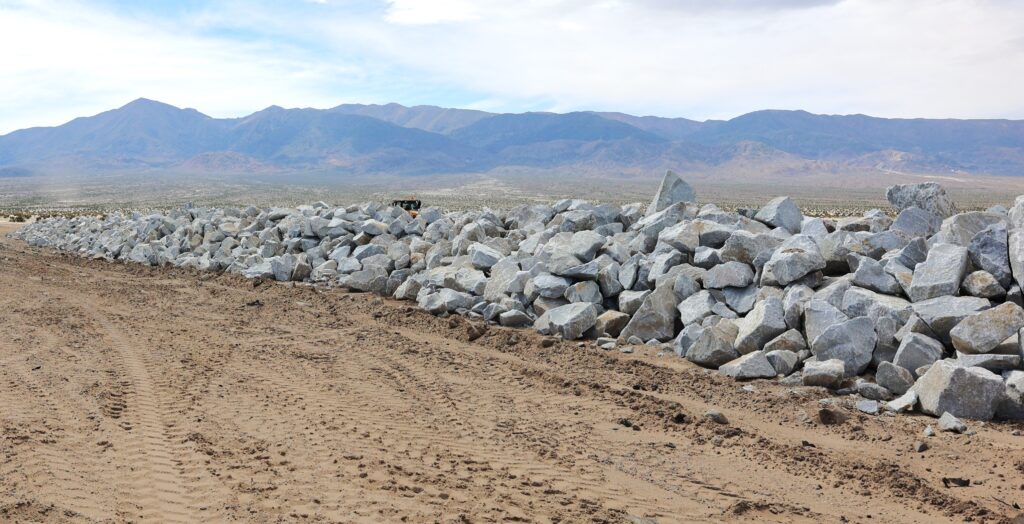
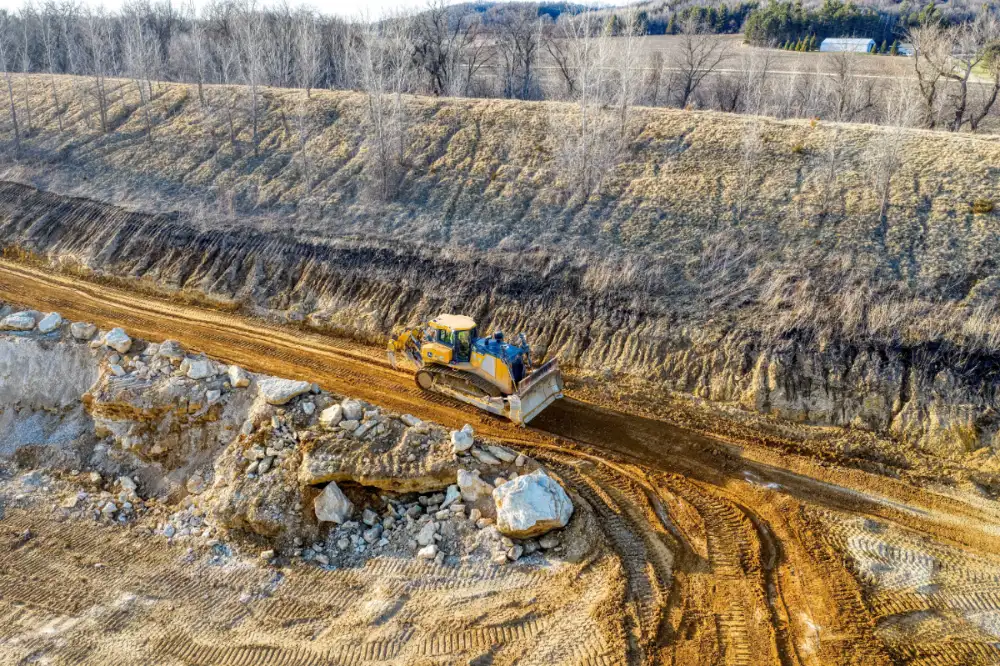
Granite rip rap used for erosion control along a construction site slope

Erosion control is one of those things everyone agrees is important and then quietly hopes will behave itself once construction starts. On large construction and landscape projects, that hope usually lasts until the first heavy rain, slope failure, or muddy access road. The reality is that erosion doesn’t wait for a project to be finished. It starts the moment soil is disturbed.

The good news is that erosion control doesn’t have to mean complicated systems or temporary fixes that get ripped out and replaced. When planned early, granite-based materials can do double duty—stabilizing sites during construction and becoming part of the permanent build.

Start with the Reality of Disturbed Ground

Large construction projects disturb soil at scale. Grading, trenching, and equipment traffic loosen the very material that once held the site together. Without intervention, water follows gravity, soil follows water, and schedules follow neither.

Granite products work well for erosion control because they add weight, structure, and drainage without sealing the ground. They slow water down instead of fighting it.

Use Base Rock to Stabilize Access Roads and Work Zones

Temporary access roads are often treated as disposable. That’s a mistake. Poor access roads become erosion channels, especially when equipment repeatedly compresses wet soil.

Installing a compacted base rock layer early:

  • Creates stable access for equipment
  • Reduces rutting and sediment movement
  • Controls runoff direction during storms

In many projects, these base layers later become part of permanent service roads or subgrade foundations, making them both practical and cost-effective.

Granite materials used for erosion control on a large construction site with graded slope

Control Slopes with Crushed Granite and Aggregate

Slopes are where erosion shows its ambition. Bare soil on an incline is an invitation for runoff to pick up speed and carry material downhill.

Granite aggregate helps by:

  • Adding mass that resists movement
  • Allowing water to drain through rather than skim across the surface
  • Reducing surface velocity that causes washouts

Crushed granite and angular aggregates interlock when compacted, making them especially effective for stabilizing embankments, swales, and graded transitions.

Use Decomposed Granite for Permeable Surface Control

Decomposed granite (DG) is often thought of as a finish material, but it plays a strong role in erosion control when used correctly. Compacted DG creates a firm, permeable surface that resists surface runoff while allowing water infiltration.

For large projects, DG is commonly used in:

  • Pedestrian corridors during phased construction
  • Temporary or permanent pathways
  • Buffer zones between hardscape and open soil

In higher-risk areas, stabilized decomposed granite can further improve binding and reduce material migration.

Plan Drainage Paths Instead of Fighting Water

One of the most effective erosion control strategies is simply deciding where water is allowed to go. Granite materials support this approach because they don’t trap moisture.

Using gravel and aggregate in drainage channels, around culverts, and at discharge points:

  • Slows water flow
  • Prevents scouring at outlets
  • Protects adjacent soil from displacement

Granite-lined drainage solutions often transition seamlessly into permanent site features.

Build Erosion Control into the Permanent Design

Temporary erosion solutions are necessary, but permanent ones save money long-term. Granite products are uniquely suited for this because they don’t need to be removed once construction ends.

Paths, access routes, drainage swales, and reinforced slopes can all be built using materials that serve both construction-phase control and finished project performance.

Common erosion-control applications for granite materials include stabilized access roads, slope reinforcement, drainage channels, pedestrian circulation areas, and transition zones between graded and landscaped surfaces

Why Material Sourcing Matters

Erosion control depends on consistency. Inconsistent material sizes or blends lead to weak points, uneven compaction, and unpredictable performance.

Working with a regional granite quarry ensures:

  • Reliable material gradation
  • Consistent supply throughout the project timeline
  • Aggregates suited to local soil and climate conditions

Granite Rock Quarry Option in Southern California

Lynxcat Mountain Quarry supplies granite, decomposed granite, base rock, and aggregate materials for large construction and landscape projects across Southern California. When erosion control is planned early and built with the right materials, it becomes part of the solution—not a recurring problem to fix after the fact.

How to Build Decomposed Granite Walkways for Commercial Properties

Decomposed granite walkways are a popular choice for commercial properties because they strike a rare balance: durable enough for steady foot traffic, flexible enough for large outdoor layouts, and natural enough to blend into professional landscapes without feeling overbuilt. You’ll see them used in business parks, campuses, HOAs, parks, vineyards, and event spaces—places where appearance matters but concrete isn’t always the right answer.

Building these walkways correctly, however, requires more than spreading granite and hoping for the best. The long-term performance of decomposed granite depends almost entirely on what happens beneath the surface.

Step 1: Plan the Walkway Layout and Drainage

Before material is delivered, establish the exact path alignment, width, and slope. Commercial walkways typically range from 4 to 8 feet wide depending on traffic volume. Gentle crowning or a slight cross-slope helps shed water and prevents pooling.

In Southern California landscapes, proper drainage is essential. Even infrequent rain can cause erosion if water has nowhere to go. Plan for runoff to move away from the walkway rather than collecting along the edges.

Step 2: Prepare and Compact the Subgrade

The subgrade is the native soil beneath the walkway. It must be graded smooth, cleared of organic material, and compacted. Soft or unstable soil should be removed and replaced with compactable fill.

Skipping subgrade preparation is the most common reason decomposed granite walkways fail. Settlement, rutting, and uneven surfaces almost always trace back to this step.

Step 3: Install a Structural Base Rock Layer

A compacted base rock layer provides the strength that keeps commercial walkways intact over time. Crushed aggregate with angular edges locks together under compaction, creating a stable foundation.

For most commercial applications:

  • Install 4–6 inches of base rock for standard pedestrian traffic
  • Increase thickness for areas expecting carts, maintenance vehicles, or heavier use

Compact the base in lifts using a plate compactor or roller to achieve proper density.

Step 4: Apply and Compact the Decomposed Granite Surface

Once the base is fully compacted, apply a 2–3 inch layer of decomposed granite. Spread it evenly and lightly moisten before compacting. Multiple passes with a plate compactor help bind the material into a smooth, firm surface.

For higher-traffic commercial walkways, stabilized decomposed granite can improve durability and reduce erosion, especially in sloped or exposed areas.

Step 5: Contain the Walkway Edges

Edge restraint is essential for maintaining clean lines and preventing material migration. Common edging options include steel edging, concrete curbs, stone borders, or adjacent hardscape.

Containment keeps the decomposed granite in place and significantly reduces long-term maintenance.

Step 6: Plan for Long-Term Maintenance

Decomposed granite walkways are low maintenance, not no maintenance. Periodic inspections, light regrading, and occasional top-off material help preserve appearance and function. Addressing small issues early prevents larger repairs later.

Why Decomposed Granite Works for Commercial Properties

When properly installed, decomposed granite walkways offer:

  • Natural appearance suited to professional landscapes
  • Good drainage and permeability
  • Lower installation costs compared to concrete
  • Easier repairs and modifications over time

Working with a reliable quarry ensures consistent material quality and appropriate aggregate selection. Lynxcat Mountain Quarry supplies decomposed granite, base rock, and related aggregates for commercial and large landscape projects throughout the region.

Get Decomposed Granite Directly from a Southern California Quarry

When you’re planning commercial walkways or large landscape projects, where your material comes from matters. Lynxcat Mountain Quarry is a Southern California–based granite quarry supplying decomposed granite, base rock, and aggregate materials directly to contractors, landscapers, and property managers. Sourcing from a regional quarry means consistent material, reliable supply, and fewer surprises once your project is underway.

Because Lynxcat operates at the source, customers benefit from material that’s produced specifically for real-world installation—not repackaged or resold from unknown origins. Whether you’re building pedestrian walkways, service paths, or outdoor circulation routes, the team can help you select the right granite and base materials for your site conditions, traffic levels, and project timeline.

If you’re sourcing decomposed granite for a commercial property or large landscape project in Southern California, Lynx Cat Mountain Quarry can help you plan quantities, coordinate delivery, and keep your project moving. Reach out to discuss material options, availability, and logistics directly with the quarry.