
“I need rip rap.”
Good start.
Now we need the rest of the information.
How big?
For what?
What does the plan call for?
What kind of slope or channel are you protecting?
How is it being placed?
Is there a specified gradation?
Because “rip rap” isn’t one rock size.
It can mean material you can move around fairly easily with normal equipment or individual rocks weighing hundreds or even thousands of pounds.
And when you’re trying to keep flowing water from taking part of your project downstream, size isn’t a cosmetic decision.
What Is Rip Rap?
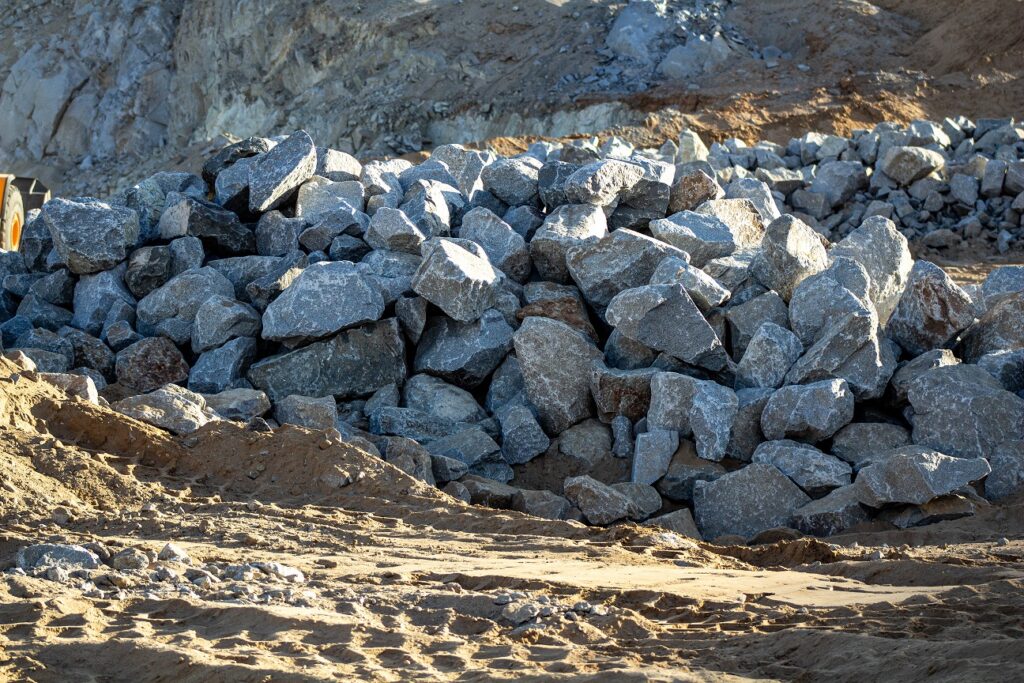
Rip rap is large, durable rock used primarily to protect soil and structures against erosion.
You’ll see it around:
Channels.
Culvert outlets.
Drainage structures.
Slopes.
Embankments.
Wash crossings.
Bridge areas.
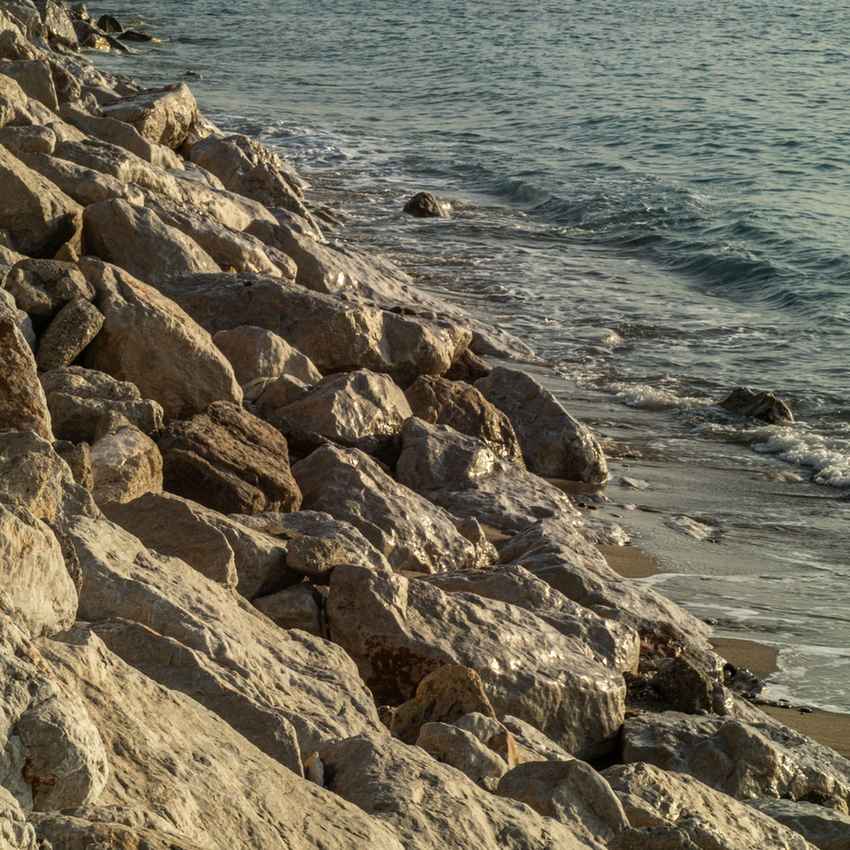
Shorelines.
And other places where moving water can attack exposed soil.
Instead of allowing water to directly hit erodible soil, the rock creates a durable protective layer.
But the rock has to be appropriate for the forces acting on it.
Otherwise, you’ve just given the water something else to move.
Rip Rap Is About Weight, Not Just Diameter
People naturally think about rock in inches.
¾-inch rock.
1½-inch rock.
Three-inch rock.
That works reasonably well for smaller aggregate.
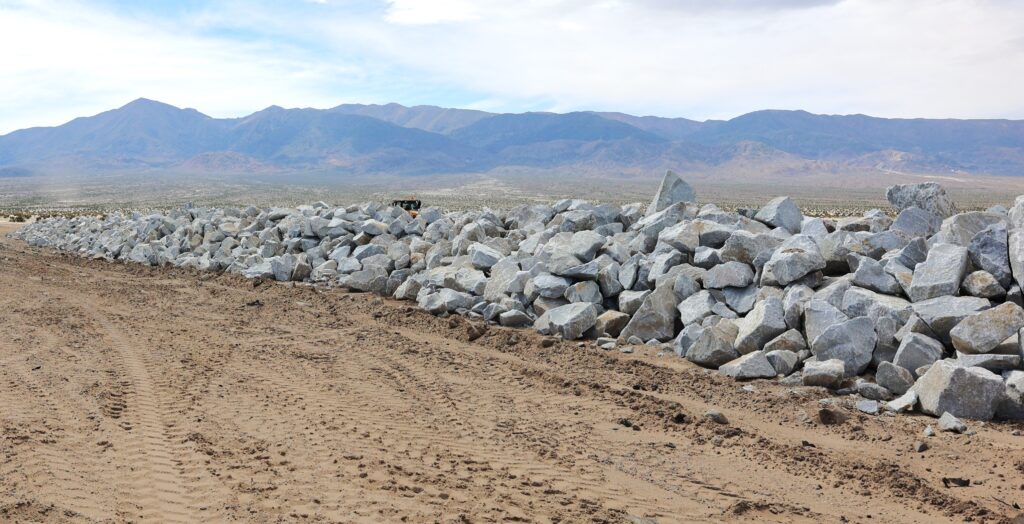
Once you get into serious rock slope protection, weight becomes extremely important.
Caltrans rock slope protection classifications include nominal rock weights such as 20 pounds, 60 pounds, 150 pounds, 300 pounds, ¼ ton, ⅜ ton, ½ ton and 1 ton.
That’s a very different way of thinking about rock.
And it makes sense.
Irregular natural rock doesn’t come off the quarry face as perfect cubes.
Two rocks with the same maximum dimension may not weigh exactly the same.
So large rock protection is commonly described in terms of weight classes and gradation requirements.
Why Bigger Rock Stays Put
Water moving through a drainage structure applies force to whatever is in its path.
Small particles are easier to move.
Larger, heavier rock takes more energy to displace.
That’s the simple version.
The actual engineering gets more complicated because designers consider water velocity, depth, turbulence, slope, channel geometry, underlying soil and other factors.
That’s why you shouldn’t size engineered rip rap by standing next to a wash and saying:
“Yeah, half-ton ought to do it.”
Use the plans.
Somebody did the hydraulic and geotechnical work for a reason.
Bigger Isn’t Automatically Better
There’s also a tendency to think that if large rock is good, enormous rock must be better.
Not necessarily.
Over-sizing can increase material, handling, excavation and placement costs. Large rock requires the right equipment and may need deliberate placement depending on the specification.
Caltrans, for example, distinguishes between different placement methods for rock slope protection. Under Method A, individual rock stability and bearing are important, and inspectors are instructed to watch for unstable “rockers.” Method B is less restrictive regarding placement of individual rocks.
That’s an important reminder:
Rip rap isn’t always just dumped over the edge of the slope.
The placement method can be part of the engineering.
Rock Shape Matters
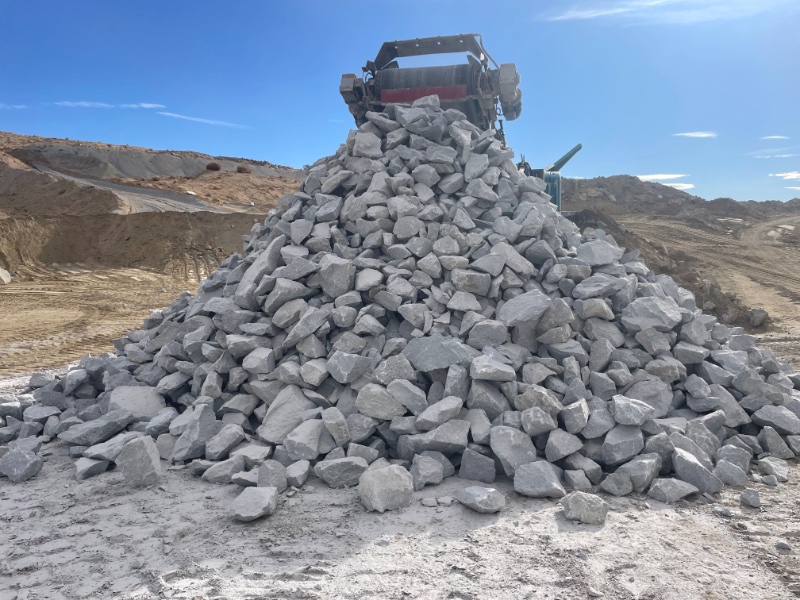
You generally want durable, irregular rock that will interlock.
Again, think about the difference between a pile of basketballs and a pile of angular boulders.
Angular rock catches.
It bears against neighboring rock.
It creates a rough surface that dissipates energy.
That’s useful in erosion protection.
Rounded material can behave very differently under hydraulic forces.
The Rock Has to Be Durable
A two-ton rock isn’t very useful if it starts falling apart.
Rip rap lives outside.
It gets wet.
It dries.
It heats up.
It gets hit by moving water and debris.
Depending on location, it may experience other weathering cycles as well.
The stone needs to remain stone.
Hard granite is well suited to heavy erosion-control applications when the material meets the project requirements.
Lynx Cat has supplied rip rap for High Desert projects including Fort Irwin, where its project history lists 3–6-inch and 8–12-inch rip rap used for gabion applications.
Don’t Forget What’s Under the Rock
Here’s another common misunderstanding:
Rip rap doesn’t work in isolation.
If water simply finds a path through the large voids and starts removing the fine soil underneath, the rock layer can lose support.
Now you’ve got settlement, movement and potentially a failed section.
Depending on the design, the system may require rock slope protection fabric, granular filter material, a footing trench or other preparation beneath the rock.
Caltrans specifically requires inspectors to verify placement of specified rock slope protection fabric before the rock is placed and to watch for fabric damage during installation.
So when you look at a completed rip rap slope, the big rocks are only the part you can see.
The system underneath matters too.
Placement Can Make or Break the Work
Large rip rap requires equipment.
And the larger the rock gets, the more important handling becomes.
You need equipment capable of safely picking, moving and placing the material.
Caltrans guidance for Method A rock slope protection specifically cautions against dropping rock into place because cracking or breaking can occur. It also calls for individual rocks to be stable rather than relying on the rock above them to hold them in position.
That’s a long way from dumping landscaping stone out of a truck.
On large engineered work, rock placement is construction.
How Much Rip Rap Do You Need?
This is where estimating large rock becomes different from ordering Class II.
You need to know:
The area being protected.
The specified layer thickness.
The required rock class or gradation.
The geometry of the installation.
The unit of measurement used by the project.
And the expected tonnage.
With very large stone, don’t rely on a generic internet tons-per-yard calculator.
Rip rap bulk density and void space can vary significantly with particle size and gradation. Lynx Cat’s own estimating guidance recommends contacting the quarry for tonnage estimates on large rip rap rather than relying on a single conversion factor.
That’s good advice whether you’re buying from us or anybody else.
Large-rock estimating is one place where a quick conversation can save a very expensive second mobilization.
What Should You Tell Lynx Cat Mountain Quarry?
The more information, the better.
If you’re calling about rip rap, have the plans or material specification available if possible.
Tell us the required class or size.
Tell us the tonnage.
Tell us where the project is.
Tell us when you need it.
If the project has testing or submittal requirements, tell us that too.
Don’t wait until trucks are scheduled to discover that the owner requires documentation nobody mentioned when the material was quoted.
Rip Rap From Lynx Cat Mountain Quarry
Lynx Cat Mountain Quarry supplies hard granite rip rap and construction aggregate for contractors working throughout Barstow, Hinkley, Fort Irwin, China Lake and the surrounding High Desert. Our project portfolio includes rip rap, Class II Base, crushed aggregate and other materials used on major military and infrastructure projects.
We know this material, and we’re happy to talk through the job before you order it.
Call Lynx Cat Mountain Quarry at 760-760-5969. Send us your spec, tell us the tonnage, and let’s get the right rock on the job.