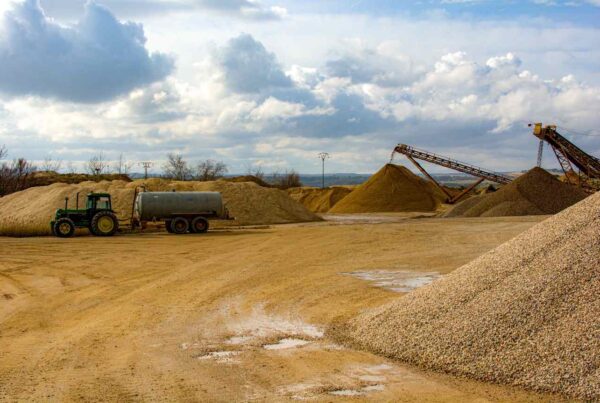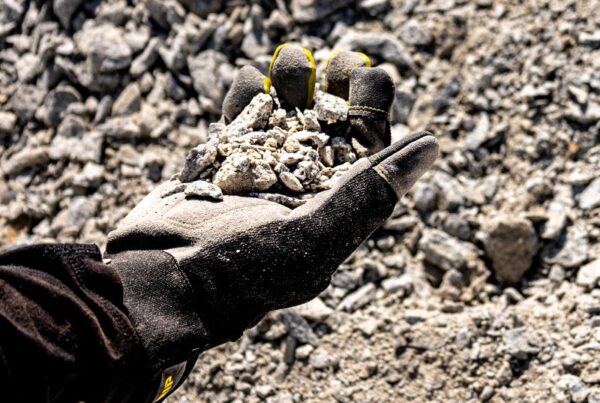
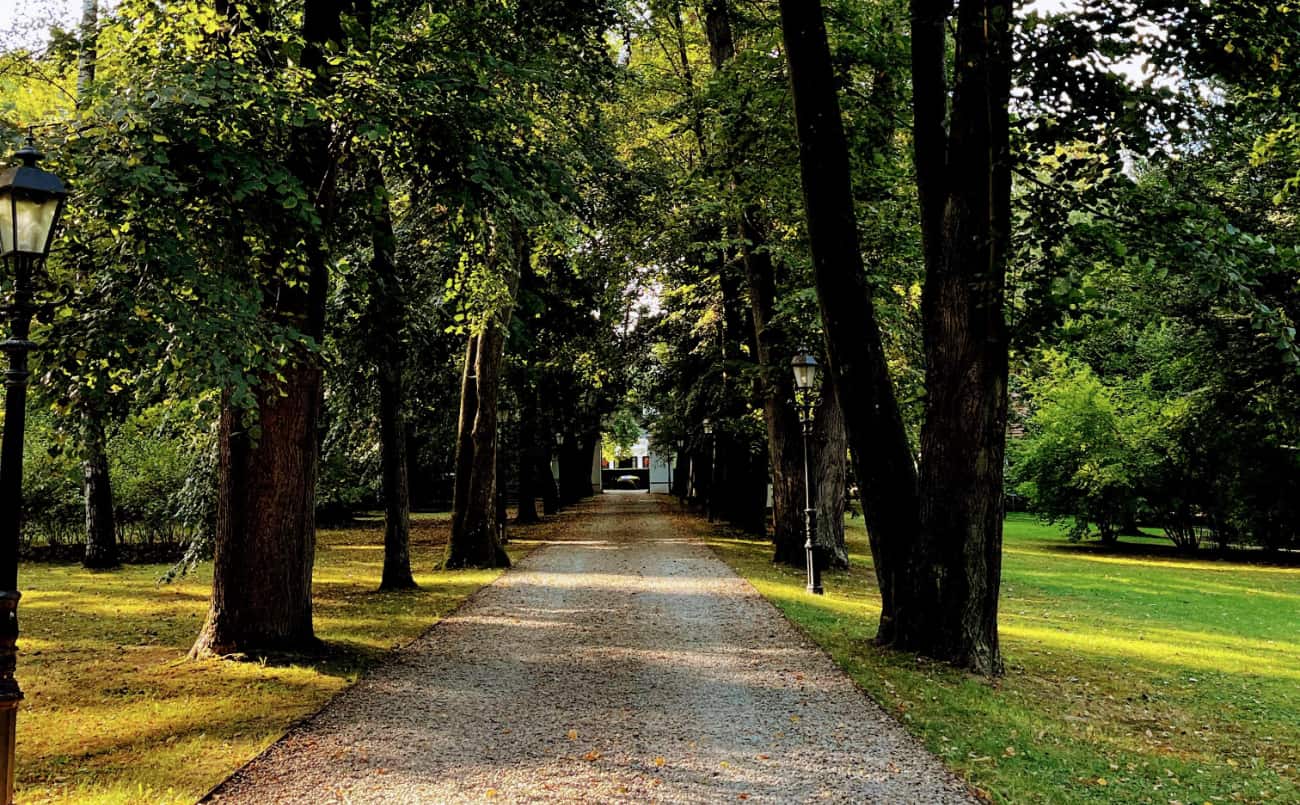
Gravel driveways are one of those things that sound simple until you’re standing at a materials yard staring at a dozen different rock options wondering why there are so many sizes of rock and which one is going to stop your driveway from turning into a mud pit every time it rains.
Here’s the short answer: granite. Here’s the longer answer: it depends on the layer.
Why Gravel Driveways Need More Than One Layer
A driveway that holds up to vehicles, weather, and time isn’t just one pile of rocks. It’s a system — typically three layers, each doing a different job.
Layer 1: The Sub-Base (Bottom) This is your foundation. You want large, angular rock — 1.5″ to 3″ crushed granite — that locks together under weight. This layer drains water down and away from the surface. Without a solid sub-base, everything above it shifts and sinks. If you’re in the high desert and dealing with expansive soils or decomposed granite native ground, don’t skip this step. It’s the difference between a driveway that lasts 20 years and one that needs attention every spring.
Layer 2: The Base (Middle) This is where Class II aggregate base comes in — crushed granite, well-graded, compacted into a firm platform. It distributes vehicle load across the sub-base and sets the grade for your surface. Caltrans uses it on highways. That alone tells you how much it handles. For residential driveways, 4 inches compacted is typical. For commercial or heavy vehicle use, go 6–8 inches and compact in lifts.
Layer 3: The Surface (Top) This is what people actually see and drive on. Options here vary:
- 3/4″ crushed granite — classic, holds well, drains well, low maintenance
- 3/8″ crushed rock — finer, smoother for foot traffic, slightly less stable under heavy vehicles
- Decomposed granite (DG) — attractive, compacts firm, popular for residential and commercial properties in Southern California
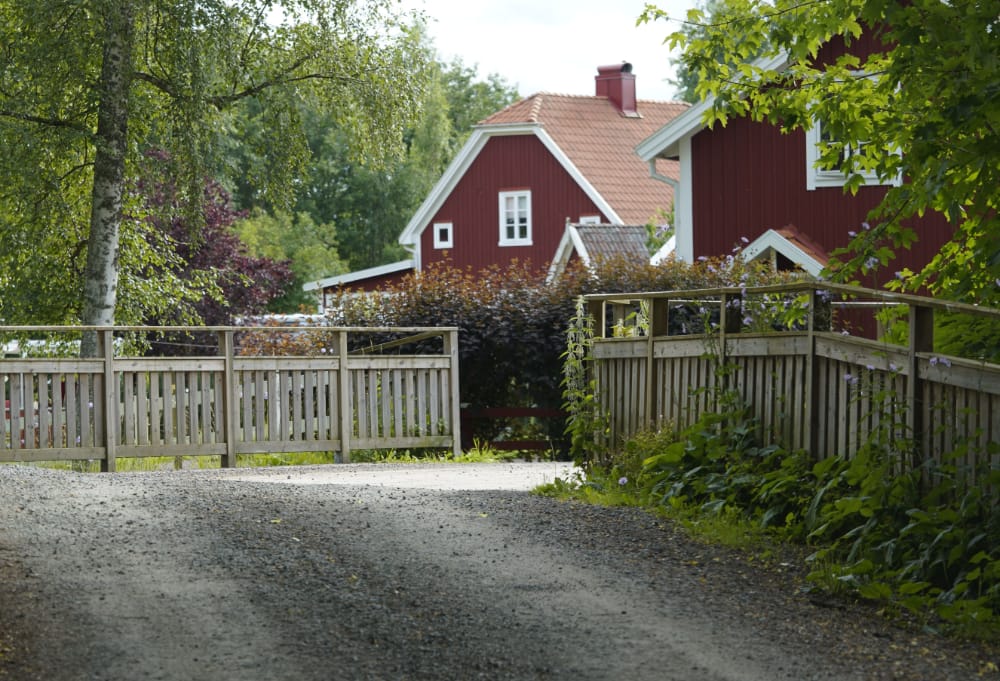
Why Granite Specifically for Gravel Driveways?
Not all rock is the same. Gravel driveways using softer stone — limestone, sandstone, or imported rounded gravel — tend to break down faster under traffic, create dust problems, and can turn muddy when wet.
Granite is different:
- Hard: Rates 6–7 on the Mohs scale. It holds its shape under loaded trucks, not just passenger cars.
- Angular: Crushed granite has sharp edges that lock together when compacted. Rounded river rock just rolls around under tires.
- Clean: Our granite doesn’t have excess fines that cause muddiness or instability.
- Local: Quarried right here in the high desert, which means a shorter haul and a lower delivered cost.
What About the High Desert Climate Specifically?
This matters more than people realize. The Mojave gets temperature swings that would destroy a poorly built driveway — hot dry summers, occasional hard freezes in winter, and heavy rain events that hit fast and drain hard. Granite handles all of it.
Rounded gravel tends to migrate in rain events because it has no interlocking structure. Fines-heavy materials get muddy and sloppy. Decomposed granite can crust and crack in extreme heat if it’s not sealed or stabilized. Angular crushed granite stays put in rain, compacts firm in heat, and doesn’t break down in freeze-thaw cycles the way softer stone does.
If you’re building a driveway in Barstow, Hinkley, Victorville, or anywhere in the high desert, the material choice isn’t just aesthetics — it’s engineering. The climate does its best to wreck what you build. Use rock that pushes back.
Maintenance: What to Expect Long-Term
One of the real advantages of a granite gravel driveway over asphalt or concrete is that repairs are simple. Asphalt cracks and needs sealing or patching. Concrete heaves and settles. Gravel — specifically angular crushed granite — can be refreshed by adding a new surface layer every several years, and spot repairs take minutes, not contractors.
What you will need to do:
- Rake and grade after heavy rain events to redistribute material
- Top off the surface layer every 3–7 years depending on traffic volume
- Edge control with a berm, curbing, or steel edging to keep surface rock from migrating off the sides over time
Compared to the ongoing cost and failure modes of paved surfaces, granite gravel is low-drama. It won’t crack. It won’t need resurfacing at $10/sq ft. And when it needs a refresh, a single phone call to us gets you more material fast.
How Much Granite Do You Need for a Driveway?
For a standard two-car driveway (roughly 20 ft × 40 ft = 800 sq ft):
- Sub-base (4″ of 1.5″–3″ rock): ~50 tons
- Class II base (4″ compacted): ~45 tons
- Surface layer (2″–3″ of 3/4″ or 3/8″): ~25 tons
That’s a ballpark — actual quantity depends on your soil conditions, existing grade, and whether you’re building from scratch or resurfacing. Not sure? Call us. We’ll help you calculate it before you order, not after you realize you’re short on a Thursday.
Gravel Driveways for Commercial Properties
Everything above applies — and then some. Commercial driveways handle semi-trucks, forklifts, heavy equipment, and constant traffic. If that’s your situation:
- Go deeper on the base layer: 6–8 inches of Class II, compacted in lifts
- Size up your sub-base rock
- Consider geotextile fabric beneath your sub-base if you’re dealing with soft or clay-heavy soil
We supply commercial and industrial sites regularly — Fort Irwin, Edwards AFB, logistics yards, and more. We know what spec means in the real world.
Get Your Driveway Rock from Lynx Cat
We stock everything you need for a gravel driveway system: sub-base rock, Class II aggregate base, 3/4″ and 3/8″ crushed granite, and decomposed granite for finish layers.
We’re in Hinkley, CA — right outside Barstow — and we deliver across the high desert and beyond.
Call 760-760-5969 or email quotes@lcmquarry.com. We’ll get you same-day pricing and help you build it right the first time.