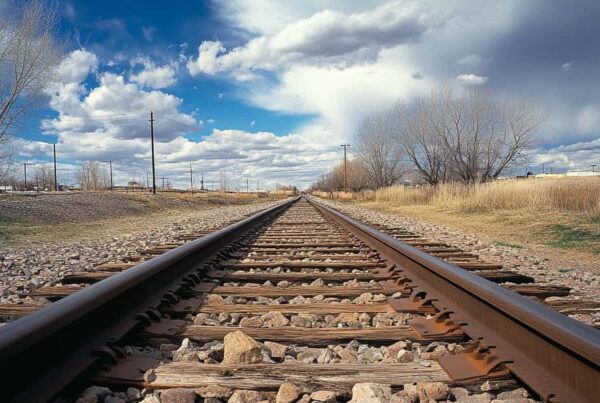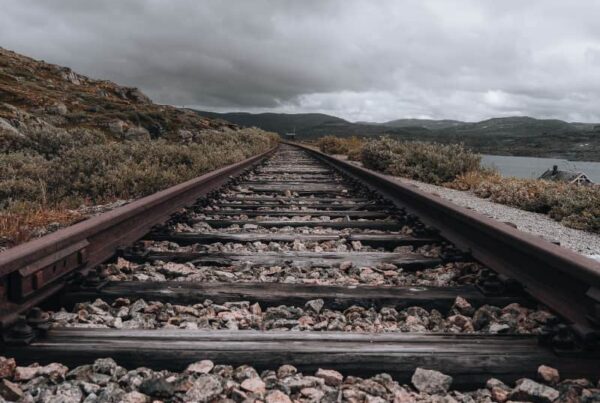
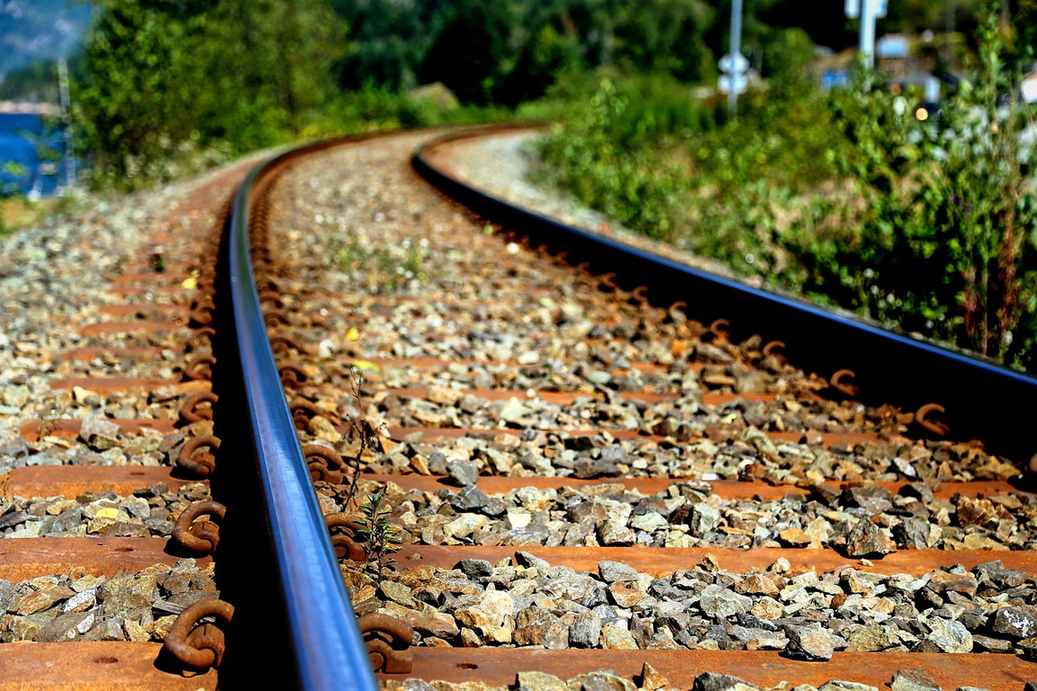
Railroad ballast looks simple from a distance.
It’s rock under railroad tracks.
Up close, there’s a lot more going on.
Those pieces of stone are part of the structure supporting enormous moving loads. Ballast has to hold the track in position, distribute loads, provide drainage and survive repeated pounding without rapidly turning itself into a pile of fines.
That makes ballast one of those products where “rock is rock” is definitely not good enough.
Hardness matters.
Shape matters.
Gradation matters.
Durability matters.
And the railroad’s specification matters.
What Does Railroad Ballast Actually Do?
Start with the track structure.
You’ve got rail carrying the wheel loads. The rail transfers those loads into the ties. The ties transfer them into the ballast and supporting layers below.
The ballast spreads those forces across a larger area.
But support isn’t its only job.
Ballast also helps hold ties in position and resist movement.
It creates a workable surface around the track structure.
And importantly, it allows water to drain.
That last point is a big reason you don’t want ballast packed with excessive fines.
Water and track structure don’t make a particularly good team.
Ballast Needs to Be Hard
Railroads aren’t gentle on aggregate.
Every train sends repeated loads through the track.
Again.
And again.
And again.
Weak rock breaks down.
As particles fracture, they produce smaller particles and fines. As the void structure fills, drainage can suffer and the physical behavior of the ballast section changes.
That’s why abrasion and degradation resistance matter.
Lynx Cat’s granite is tested for railroad applications, and the quarry has reported testing including LA rattler/abrasion work alongside sieve and durability testing for ballast qualification.
The point of those tests is pretty straightforward:
How well does this rock survive abuse?
For ballast, that’s a useful thing to know.
What Is LA Abrasion Testing?
The Los Angeles abrasion test is one of the standard ways aggregate resistance to abrasion and degradation is evaluated.
A prepared aggregate sample is placed in a rotating steel drum with steel spheres. As the drum rotates, the aggregate is subjected to impact and abrasion.
Then the material is evaluated to determine how much degradation occurred.
The test isn’t pretending to literally reproduce a railroad track inside a laboratory.
It’s a standardized way to compare how aggregate holds up under mechanical punishment.
Hard, durable stone performs better than material that readily breaks apart.
For railroad ballast, that’s obviously relevant.
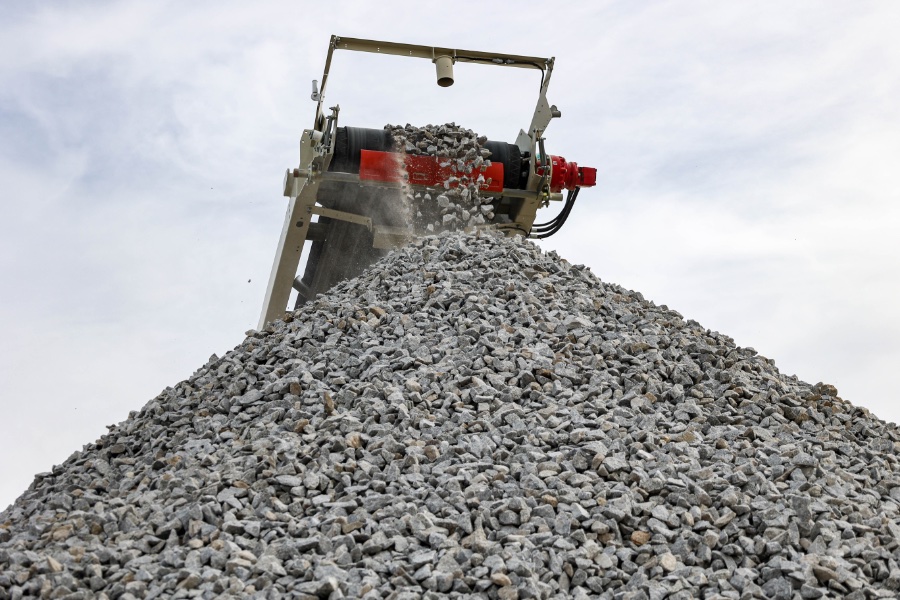
Angularity Helps Ballast Lock Together
Now think about shape.
If you filled the ballast section with smooth round river cobbles, individual particles would have a greater tendency to move and roll against one another.
Crushed stone is different.
Fractured faces and angular edges help particles interlock.
That’s valuable when the material’s job includes resisting lateral and longitudinal movement of the track structure.
This is one reason quarried and crushed hard rock is so well suited to ballast production.
The crusher isn’t simply making big rocks smaller.
It’s helping create the physical particle shape required by the application.
Gradation Matters
Ballast also isn’t a random mixture of whatever came off the crusher that morning.
Railroads specify gradations.
Gradation describes the distribution of particle sizes within the material.
That’s measured using sieve analysis.
The sample is passed through a series of standardized sieves, and the amount retained or passing each sieve tells you whether the product falls within the specified gradation.
This is basic aggregate QC, but it matters enormously.
Too many undersized particles changes the void structure.
Too much oversize material creates another problem.
The product needs to land inside the required range.
Why Fines Are a Problem in Ballast
A certain amount of particle breakdown happens over time. The problem is when too much fine material accumulates.
Fresh ballast contains void spaces between the larger angular particles.
Those spaces help water move through the section.
Start filling them with dirt, degraded rock and fines and you change the drainage characteristics of the ballast.
That’s why clean material matters.
It’s also why durability matters over the long haul.
Ballast that quickly breaks down creates its own fines.
Granite Is Built for Abuse
Granite has characteristics that make high-quality deposits attractive for heavy aggregate applications.
It can be hard.
It can be durable.
When crushed, it produces angular particles.
But here’s the important quarry answer:
The name of the rock alone doesn’t qualify the product.
You still test it.
Not every deposit is identical. Not every face in every quarry produces identical material. And not every railroad uses exactly the same specification.
A quarry can’t simply say, “It’s granite, so it’s ballast.”
The material has to meet the required tests and gradation for the job.
That’s where the lab work comes in.
Ballast Isn’t Just About the Rock
Logistics matter too.
Ballast is heavy.
Very heavy.
Lynx Cat’s estimating information puts railroad ballast at roughly 1.5 tons per cubic yard as a planning figure, although actual project quantities and conversion factors should be based on the specified product and job requirements.
Once you’re talking about thousands or tens of thousands of tons, quarry location starts affecting the economics in a big way.
Every additional mile is multiplied across truck after truck—or across the logistics of moving material by rail.
Lynx Cat Mountain Quarry is located in Hinkley near Barstow and serves the High Desert, including areas associated with the Cajon and Mojave rail subdivisions. Its own customer feedback specifically points to the quarry’s location as an advantage for rail capital work around Barstow.
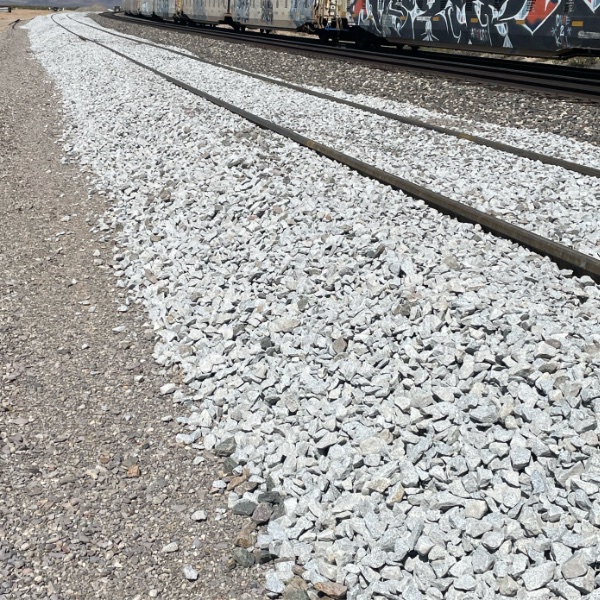
Don’t Order “Ballast.” Order the Ballast in the Spec.
This may be the most important point in the whole article.
If you’ve got a railroad project, send us the specification.
Don’t call and say you need “railroad rock.”
Railroads and individual projects may specify gradation, abrasion resistance, durability and other characteristics.
We need to know whose track we’re talking about and what the contract documents require.
UPRR?
BNSF?
A yard?
Industrial track?
Military facility?
A particular engineered specification?
Give us the information before the material starts moving.
That’s how you avoid expensive surprises.
Railroad Ballast From Lynx Cat Mountain Quarry
Lynx Cat Mountain Quarry produces hard granite aggregate in Hinkley, California, near Barstow. Railroad ballast is one of our core products, alongside Class II Base, crushed aggregate, rip rap and sand.
If you’re estimating a rail project, send us the specification and expected tonnage.
We’ll talk material, testing, production and logistics.
Call Lynx Cat Mountain Quarry at 760-760-5969 to talk about ballast for your next project.