Erosion control is one of those things everyone agrees is important and then quietly hopes will behave itself once construction starts. On large construction and landscape projects, that hope usually lasts until the first heavy rain, slope failure, or muddy access road. The reality is that erosion doesn’t wait for a project to be finished. It starts the moment soil is disturbed.
The good news is that erosion control doesn’t have to mean complicated systems or temporary fixes that get ripped out and replaced. When planned early, granite-based materials can do double duty—stabilizing sites during construction and becoming part of the permanent build.
Start with the Reality of Disturbed Ground
Large construction projects disturb soil at scale. Grading, trenching, and equipment traffic loosen the very material that once held the site together. Without intervention, water follows gravity, soil follows water, and schedules follow neither.
Granite products work well for erosion control because they add weight, structure, and drainage without sealing the ground. They slow water down instead of fighting it.
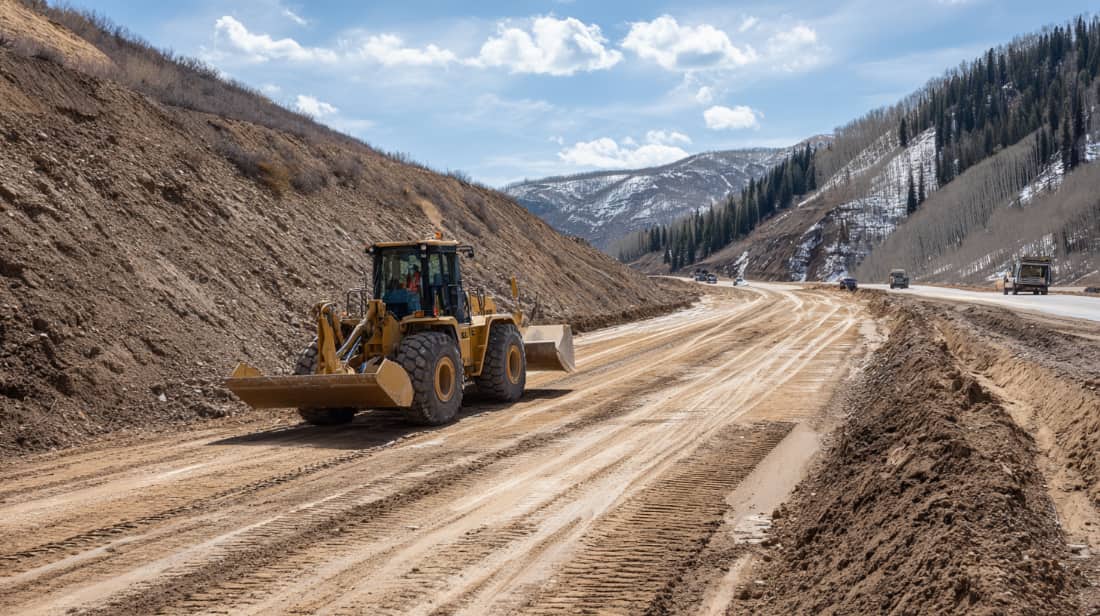
Use Base Rock to Stabilize Access Roads and Work Zones
Temporary access roads are often treated as disposable. That’s a mistake. Poor access roads become erosion channels, especially when equipment repeatedly compresses wet soil.
Installing a compacted base rock layer early:
- Creates stable access for equipment
- Reduces rutting and sediment movement
- Controls runoff direction during storms
In many projects, these base layers later become part of permanent service roads or subgrade foundations, making them both practical and cost-effective.
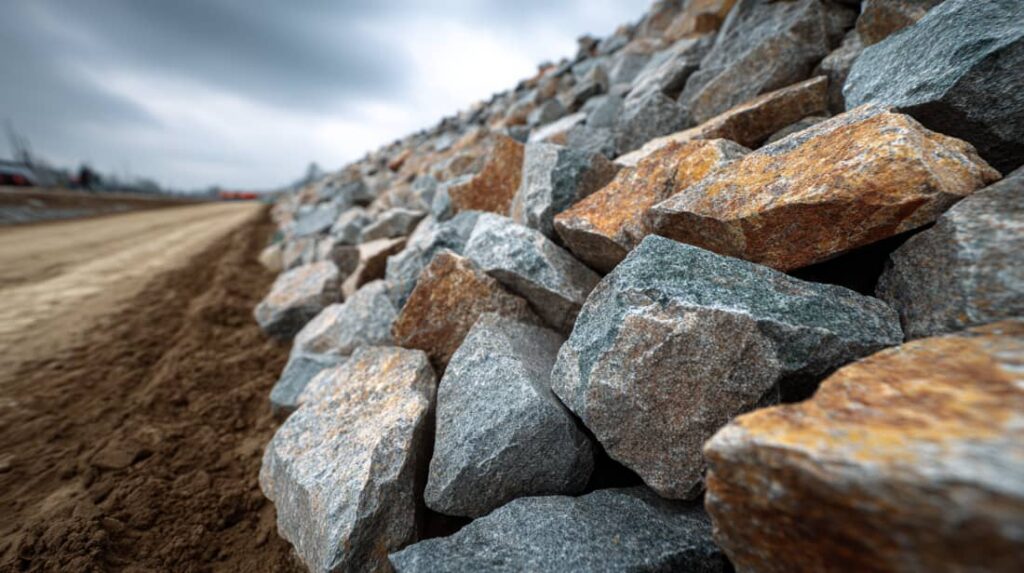
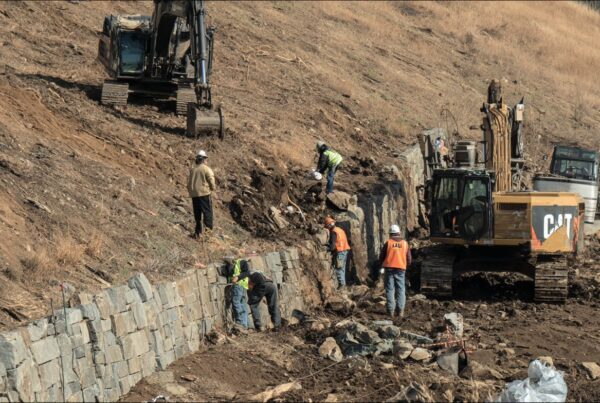
Control Slopes with Crushed Granite and Aggregate
Slopes are where erosion shows its ambition. Bare soil on an incline is an invitation for runoff to pick up speed and carry material downhill.
Granite aggregate helps by:
- Adding mass that resists movement
- Allowing water to drain through rather than skim across the surface
- Reducing surface velocity that causes washouts
Crushed granite and angular aggregates interlock when compacted, making them especially effective for stabilizing embankments, swales, and graded transitions.
Use Decomposed Granite for Permeable Surface Control
Decomposed granite (DG) is often thought of as a finish material, but it plays a strong role in erosion control when used correctly. Compacted DG creates a firm, permeable surface that resists surface runoff while allowing water infiltration.
For large projects, DG is commonly used in:
- Pedestrian corridors during phased construction
- Temporary or permanent pathways
- Buffer zones between hardscape and open soil
In higher-risk areas, stabilized decomposed granite can further improve binding and reduce material migration.
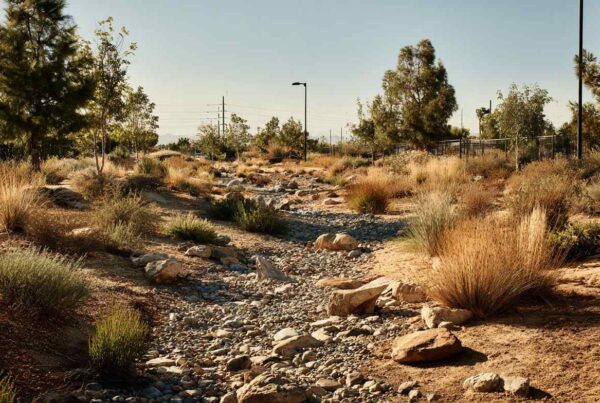
Plan Drainage Paths Instead of Fighting Water
One of the most effective erosion control strategies is simply deciding where water is allowed to go. Granite materials support this approach because they don’t trap moisture.
Using gravel and aggregate in drainage channels, around culverts, and at discharge points:
- Slows water flow
- Prevents scouring at outlets
- Protects adjacent soil from displacement
Granite-lined drainage solutions often transition seamlessly into permanent site features.
Build Erosion Control into the Permanent Design
Temporary erosion solutions are necessary, but permanent ones save money long-term. Granite products are uniquely suited for this because they don’t need to be removed once construction ends.
Paths, access routes, drainage swales, and reinforced slopes can all be built using materials that serve both construction-phase control and finished project performance.
Common erosion-control applications for granite materials include stabilized access roads, slope reinforcement, drainage channels, pedestrian circulation areas, and transition zones between graded and landscaped surfaces
Why Material Sourcing Matters
Erosion control depends on consistency. Inconsistent material sizes or blends lead to weak points, uneven compaction, and unpredictable performance.
Working with a regional granite quarry ensures:
- Reliable material gradation
- Consistent supply throughout the project timeline
- Aggregates suited to local soil and climate conditions
Granite Rock Quarry Option in Southern California
Lynxcat Mountain Quarry supplies granite, decomposed granite, base rock, and aggregate materials for large construction and landscape projects across Southern California. When erosion control is planned early and built with the right materials, it becomes part of the solution—not a recurring problem to fix after the fact.