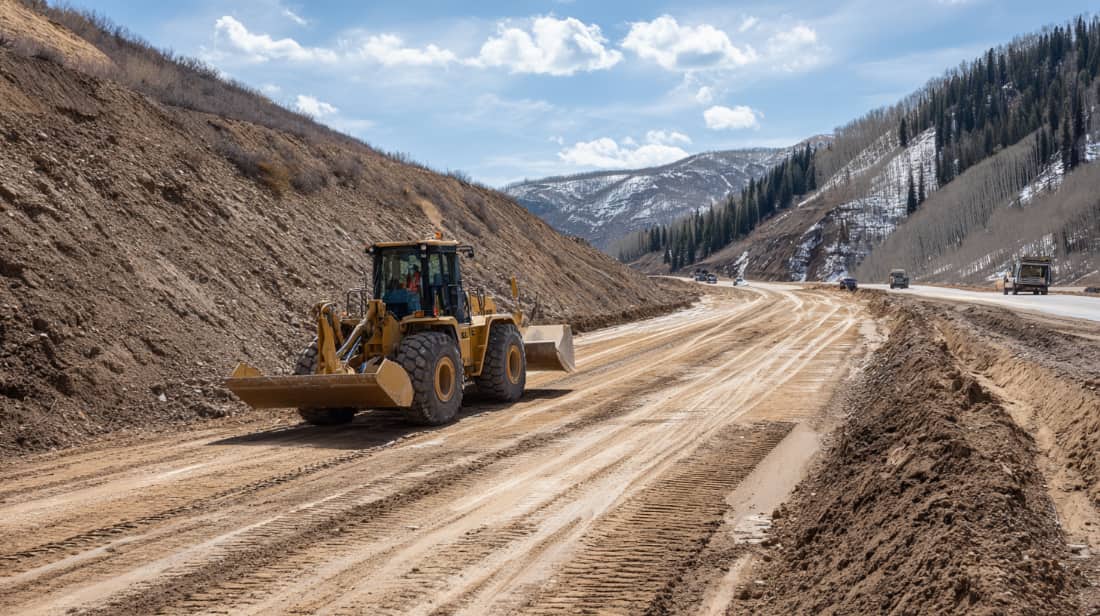
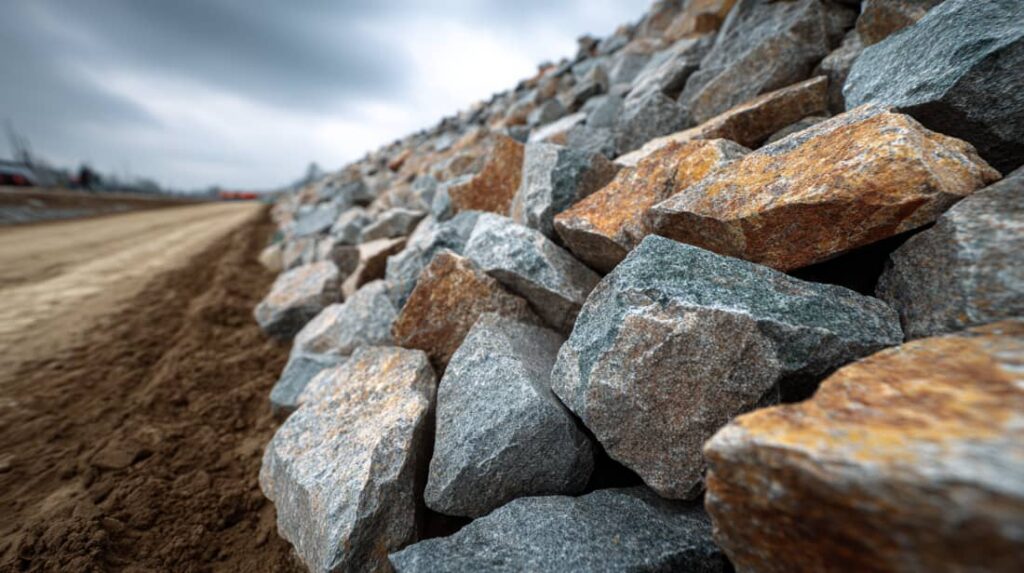
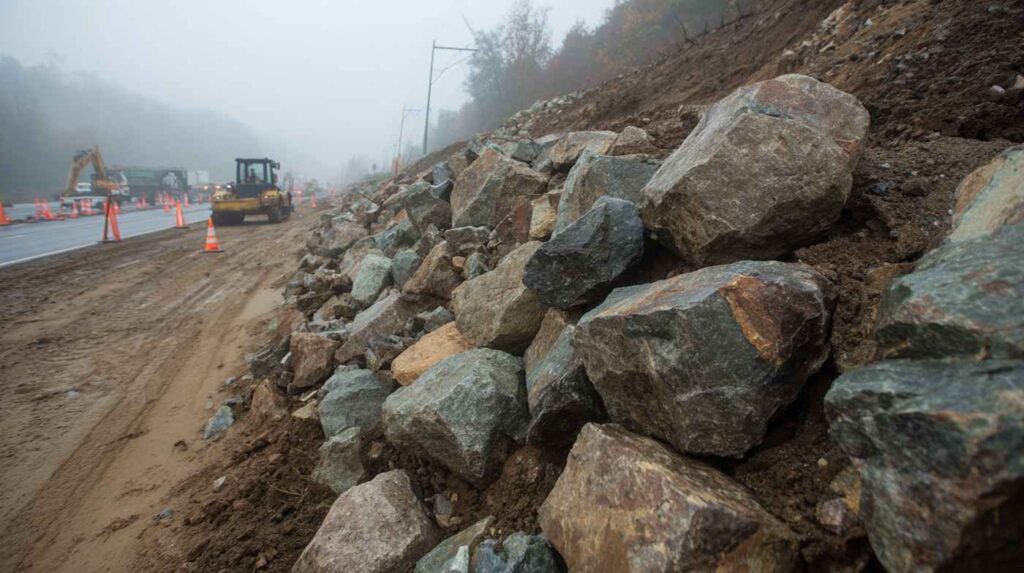
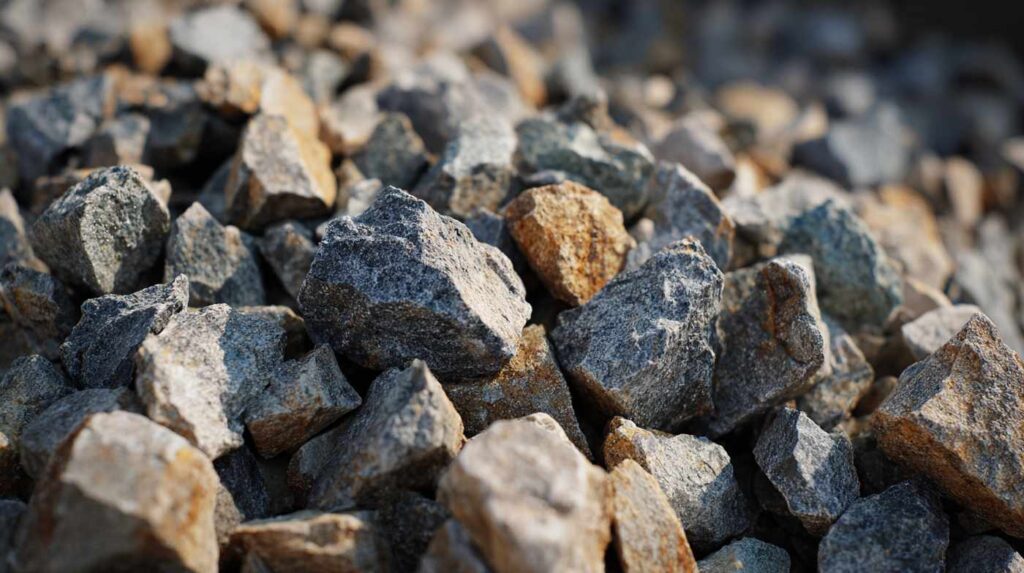
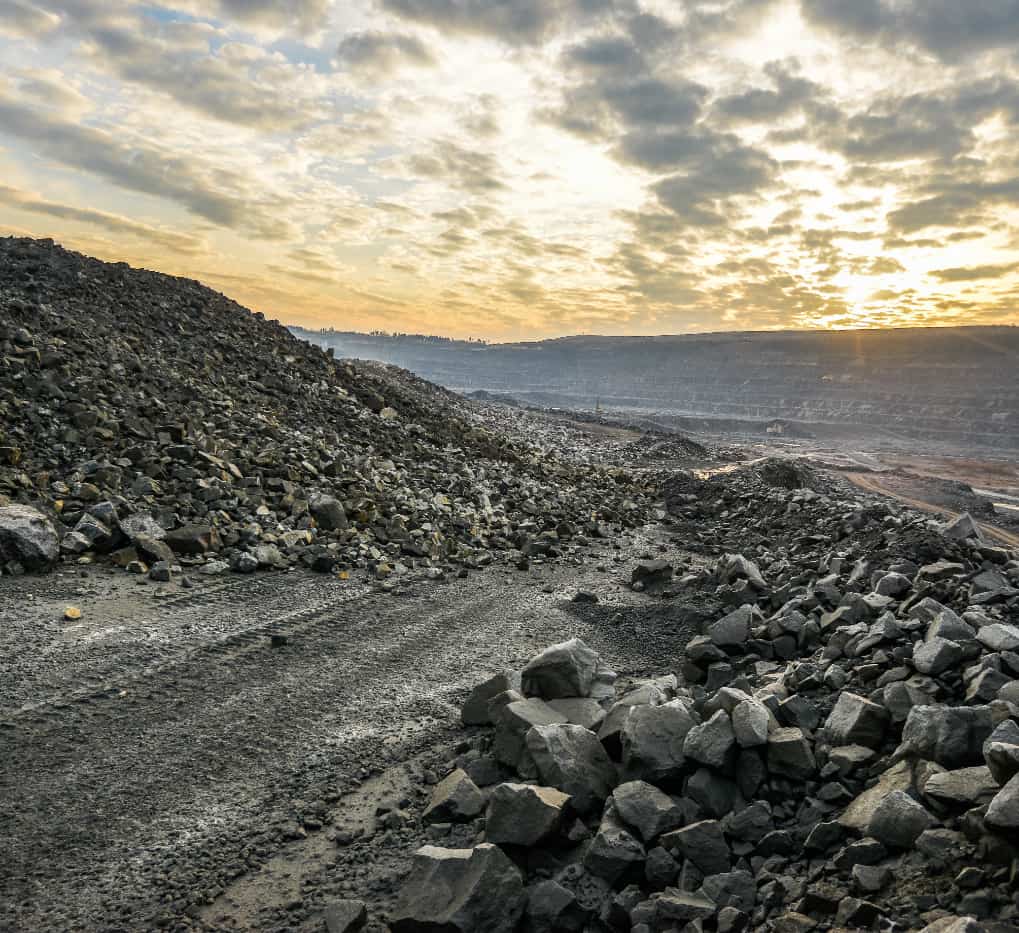
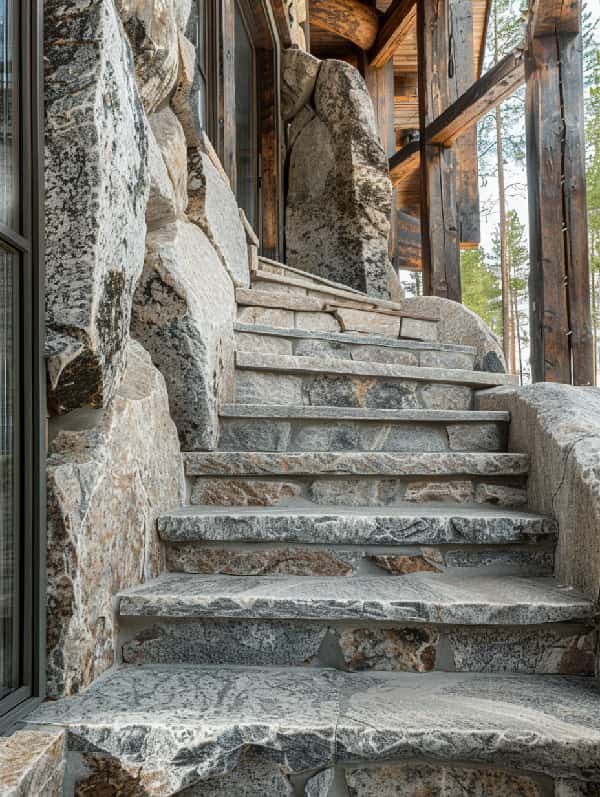
Erosion control is one of those things everyone agrees is important and then quietly hopes will behave itself once construction starts. On large construction and landscape projects, that hope usually lasts until the first heavy rain, slope failure, or muddy access road. The reality is that erosion doesn’t wait for a project to be finished. It starts the moment soil is disturbed.
The good news is that erosion control doesn’t have to mean complicated systems or temporary fixes that get ripped out and replaced. When planned early, granite-based materials can do double duty—stabilizing sites during construction and becoming part of the permanent build.
Start with the Reality of Disturbed Ground
Large construction projects disturb soil at scale. Grading, trenching, and equipment traffic loosen the very material that once held the site together. Without intervention, water follows gravity, soil follows water, and schedules follow neither.
Granite products work well for erosion control because they add weight, structure, and drainage without sealing the ground. They slow water down instead of fighting it.
Use Base Rock to Stabilize Access Roads and Work Zones
Temporary access roads are often treated as disposable. That’s a mistake. Poor access roads become erosion channels, especially when equipment repeatedly compresses wet soil.
Installing a compacted base rock layer early:
Creates stable access for equipment
Reduces rutting and sediment movement
Controls runoff direction during storms
In many projects, these base layers later become part of permanent service roads or subgrade foundations, making them both practical and cost-effective.
Control Slopes with Crushed Granite and Aggregate
Slopes are where erosion shows its ambition. Bare soil on an incline is an invitation for runoff to pick up speed and carry material downhill.
Granite aggregate helps by:
Adding mass that resists movement
Allowing water to drain through rather than skim across the surface
Reducing surface velocity that causes washouts
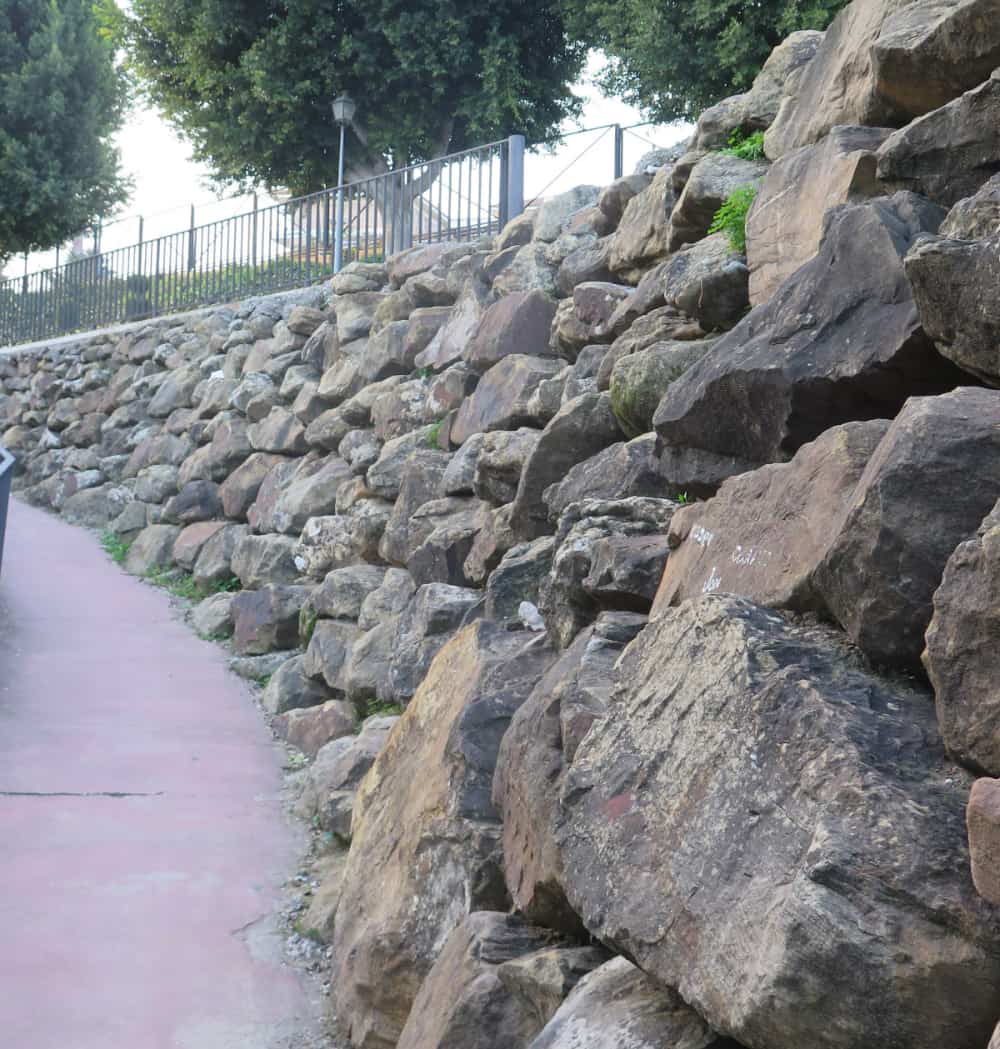
Crushed granite and angular aggregates interlock when compacted, making them especially effective for stabilizing embankments, swales, and graded transitions.
Use Decomposed Granite for Permeable Surface Control
Decomposed granite (DG) is often thought of as a finish material, but it plays a strong role in erosion control when used correctly. Compacted DG creates a firm, permeable surface that resists surface runoff while allowing water infiltration.
For large projects, DG is commonly used in:
Pedestrian corridors during phased construction
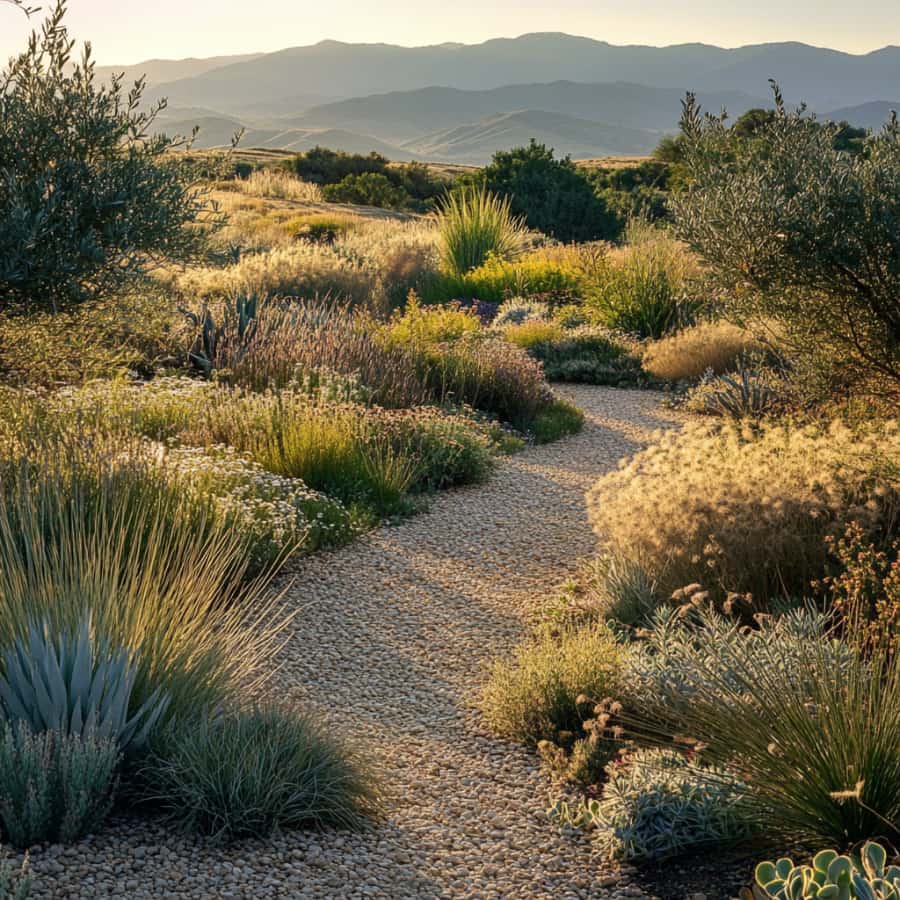
Temporary or permanent pathways
Buffer zones between hardscape and open soil
In higher-risk areas, stabilized decomposed granite can further improve binding and reduce material migration.
Plan Drainage Paths Instead of Fighting Water
One of the most effective erosion control strategies is simply deciding where water is allowed to go. Granite materials support this approach because they don’t trap moisture.
Using gravel and aggregate in drainage channels, around culverts, and at discharge points:
Slows water flow
Prevents scouring at outlets
Protects adjacent soil from displacement
Granite-lined drainage solutions often transition seamlessly into permanent site features.
Build Erosion Control into the Permanent Design
Temporary erosion solutions are necessary, but permanent ones save money long-term. Granite products are uniquely suited for this because they don’t need to be removed once construction ends.
Paths, access routes, drainage swales, and reinforced slopes can all be built using materials that serve both construction-phase control and finished project performance.
Common erosion-control applications for granite materials include stabilized access roads, slope reinforcement, drainage channels, pedestrian circulation areas, and transition zones between graded and landscaped surfaces
Why Material Sourcing Matters
Erosion control depends on consistency. Inconsistent material sizes or blends lead to weak points, uneven compaction, and unpredictable performance.
Working with a regional granite quarry ensures:
Reliable material gradation
Consistent supply throughout the project timeline
Aggregates suited to local soil and climate conditions
Granite Rock Quarry Option in Southern California
Lynxcat Mountain Quarry supplies granite, decomposed granite, base rock, and aggregate materials for large construction and landscape projects across Southern California. When erosion control is planned early and built with the right materials, it becomes part of the solution—not a recurring problem to fix after the fact.
Are you finding it harder to keep landscapes thriving or construction projects stable in dry, sun-baked climates? If so, you’re not alone. Unpredictable rainstorms can cause unexpected erosion and water damage, even in the driest regions.
That’s why effective drainage solutions are now more important than ever. Choosing the right drainage granite rock options for dry climates can make all the difference between a resilient garden and one that washes away with the next downpour.
This article spotlights the 7 most essential granite rock choices you’ll want to consider in 2025. Whether you’re a homeowner, landscaper, or contractor, you’ll discover which granite options work best for drainage, how they protect your property, and what makes each one unique.
Ready to transform your outdoor space and solve your toughest drainage challenges? Let’s explore the top granite rock solutions designed for dry climates.
Why Drainage Granite Rocks Matter in Dry Climates
If you live or work in an arid region, you know how unpredictable water can be. Dry spells can stretch on for months, but when rain finally comes, it often arrives as a sudden downpour. This creates a unique challenge—how do you manage water flow and prevent erosion when your soil is parched one day and flooded the next? That’s where drainage granite rock options for dry climates become essential.
Granite rocks are a top choice for controlling stormwater and protecting your landscape. Unlike softer stones, granite stands up to intense weather, resisting breakdown and keeping your soil in place. Many successful gardens and commercial sites rely on using granite gravel for improved soil drainage to avoid costly damage and keep plants thriving. With the right installation, this material channels water away from foundations, reduces erosion, and even enhances the look of your property.
Let’s compare granite to some common alternatives:
Material
Durability
Drainage
Maintenance
Cost
Granite
High
Excellent
Low
Moderate
Lava Rock
Medium
Good
Medium
Low–Moderate
River Rock
Medium
Good
Medium
Moderate
Choosing drainage granite rock options for dry climates means investing in a solution that lasts longer and works harder, especially as weather patterns grow more extreme. Your plants, and your property, will thank you for it.
7 Essential Drainage Granite Rock Options for Dry Climates 2025
Choosing the right drainage granite rock options for dry climates can make or break your landscaping success, especially as weather patterns become less predictable. Let’s dig into the top seven granite solutions designed to handle the challenges of arid regions in 2025.
1. Decomposed Granite Gravel
Decomposed granite gravel is a favorite among drainage granite rock options for dry climates. Its fine, compactable texture makes it perfect for pathways, French drains, and garden trails. With excellent permeability, water drains through quickly, preventing puddles and erosion.
It’s low maintenance, weed-resistant, and comes in earthy hues to suit most landscapes. For more on its drainage benefits, check out permeable paving and stormwater management. While versatile and attractive, it may need periodic replenishment if used in high-traffic areas.
2. Crushed Granite Aggregate
If you need stability and drainage, crushed granite aggregate stands out among drainage granite rock options for dry climates. Its angular pieces create channels for water to flow, reducing runoff and soil erosion. This option is common in drainage ditches and behind retaining walls.
Crushed granite resists compaction, so it maintains drainage effectiveness over time. Pricing ranges from $35 to $60 per ton. It’s durable, long-lasting, and suitable for both residential and commercial landscapes. Just keep in mind, it can feel rough underfoot if used for pathways.
3. Granite Riprap
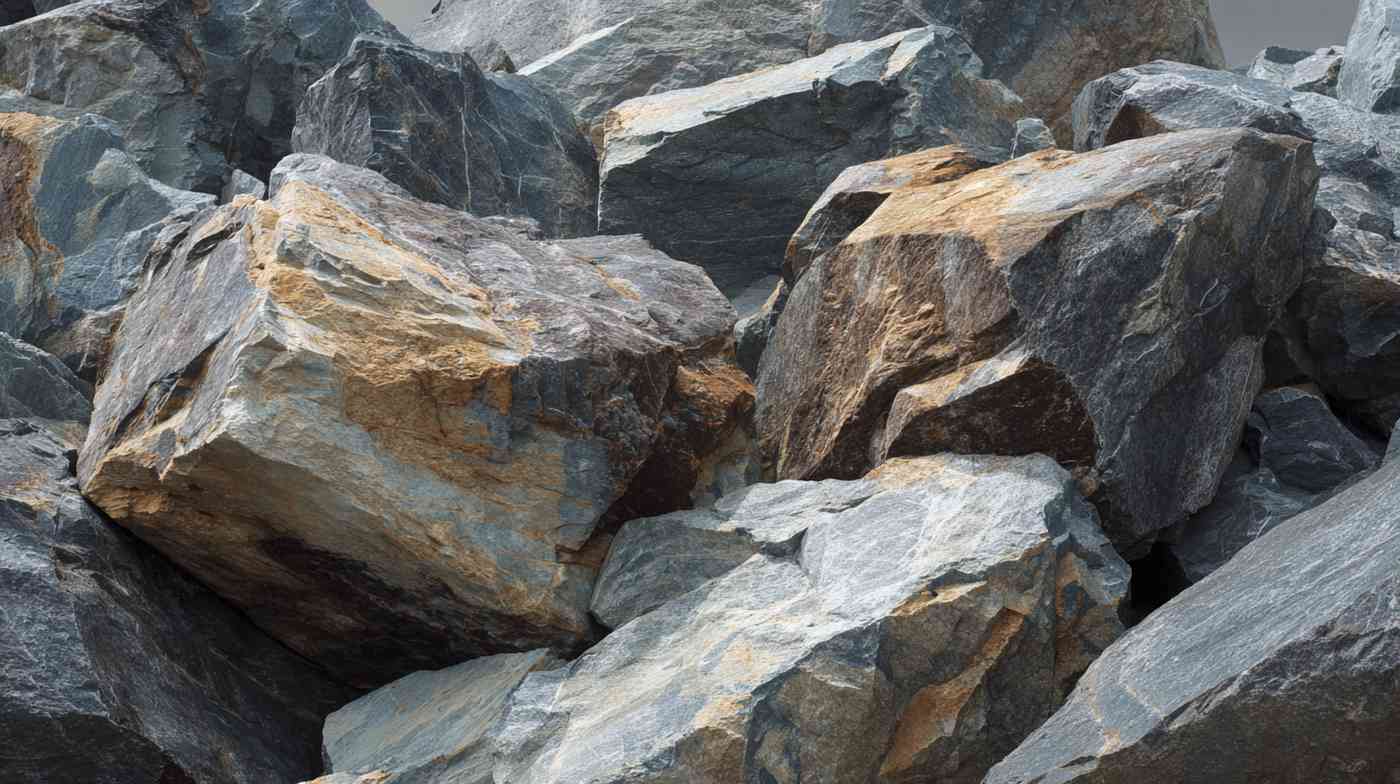
Granite riprap is the heavy lifter of drainage granite rock options for dry climates. These large, irregular chunks are perfect for controlling erosion along slopes, dry creek beds, and culverts. Riprap is designed to handle high water volumes and rapid runoff, making it a must-have in storm-prone areas.
The price typically falls between $50 and $75 per ton, depending on size. While it provides maximum durability, installing riprap usually requires machinery and professional help.
4. Granite Cobbles
Granite cobbles offer a blend of function and beauty among drainage granite rock options for dry climates. These rounded stones, ranging from 2 to 10 inches, are popular for swales, garden borders, and dry riverbeds. They help slow down water flow, reducing erosion risks in your landscape.
Cobbles are visually appealing, especially in xeriscape gardens, but they come at a higher cost—about $70 to $120 per ton. They’re easy to reposition, though, making them flexible for design changes.
5. Granite Pea Gravel
Looking for something gentle and versatile? Granite pea gravel is a top pick in drainage granite rock options for dry climates. The smooth, small stones (about 3/8 inch) are perfect for French drains and garden paths. They provide high permeability, ensuring water drains away quickly.
This gravel is comfortable underfoot and pet-friendly. Prices range from $45 to $70 per ton. One downside is that it can migrate from its intended area without proper edging.
6. Stabilized Decomposed Granite
Stabilized decomposed granite takes the classic option up a notch for drainage granite rock options for dry climates. By mixing in stabilizers, you get a firmer, dust-reducing surface that stands up to heavy foot traffic. It’s a smart solution for patios, walkways, and accessible paths.
You’ll pay a bit more—$60 to $100 per ton—but the durability and clean look are worth it. It keeps water draining efficiently, while providing a solid, low-maintenance surface.
7. Granite Boulders
Granite boulders bring drama and function to drainage granite rock options for dry climates. These large, decorative rocks help direct and slow runoff, prevent soil washout, and double as stunning hardscape features. They’re commonly used in high-flow areas or as natural barriers.
Prices vary widely, from $100 to $300 per ton, depending on size and source. While highly effective and visually striking, boulders are heavy and require careful planning for placement.
How to Choose the Right Granite Rock for Your Drainage Needs
Selecting the best drainage granite rock options for dry climates starts with a close look at your landscape’s unique challenges. Are you dealing with compacted soil, steep slopes, or areas where water tends to pool after rare rainstorms? Take note of how water moves across your property and think about your overall design goals.
Next, weigh the key factors that set different drainage granite rock options for dry climates apart. Here’s a quick comparison table to help you decide:
Getting the most out of your drainage granite rock options for dry climates starts with thoughtful preparation. Before you install, always clear the area of debris and level the ground. Proper grading ensures that water will flow away from structures and not pool, which is essential in arid regions where sudden storms can cause erosion.
Here are a few best practices to keep your project running smoothly:
Layering is key. Place larger rocks or gravel at the base, then top with finer granite material. This helps improve drainage and keeps everything in place.
Install a quality weed barrier beneath your rocks to prevent unwanted growth and keep maintenance low.
Use sturdy edging. Edging helps contain your granite rock, especially important in dry climates where wind can move lighter material.
Regularly inspect and replenish. Over time, some granite types may shift or thin. Check your installation after heavy rains and top up as needed.
Common mistakes to avoid? Skipping the weed barrier, ignoring slope, or choosing the wrong granite size for your drainage needs. These missteps can lead to poor water flow and more maintenance down the road.
Pair your granite rocks with native plants for a seamless look that supports local ecology. And if your project is larger or especially complex, don’t hesitate to consult a professional installer for guidance. DIY is rewarding, but expert help can ensure your drainage solution stands the test of time.
Trends in Granite Rock Drainage Solutions for 2025
As you look ahead to 2025, expect to see innovation take center stage in drainage granite rock options for dry climates. Suppliers are exploring more sustainable sourcing methods, ensuring that eco-friendly choices are available for your next project.
Climate change is a big driver behind this shift. With more frequent droughts and sudden heavy rains, demand for effective drainage solutions is rising. According to landscaping industry reports, homeowners and contractors are gravitating toward new colors and sizes that blend seamlessly with modern landscape designs.
Smart irrigation and sustainable practices are becoming standard, too. Many projects now pair granite rocks with water-saving technologies. For a deeper dive into how climate impacts drainage, check out Acid rock drainage and climate change.
These trends ensure you have more choices than ever to create resilient, beautiful landscapes that stand up to the challenges of dry regions.
So, after exploring all these granite rock options for dry climates, are you feeling inspired to take the next step with your own landscape project? Whether you’re aiming to prevent erosion, boost curb appeal, or just want a low maintenance solution that’ll last, you have plenty of choices to fit your needs. If you’re curious about which option is truly best for your unique space, why not chat with someone who knows the ins and outs of both landscaping and long term property protection?
Let’s talk it through—just 760-760-5969 and get personal guidance for your next project.
There’s something wildly poetic about a pile of rocks.
Stay with me.
Not in the polished, marble-statue-in-a-museum kind of way—but in the honest, dusty, underfoot way. Granite from a High Desert rock quarry in Southern California doesn’t glimmer; it doesn’t shout. It just shows up.
Again and again, in roadbeds, rail lines, erosion control, and military-grade infrastructure. And while the rest of the world scrolls past it, distracted by shinier things, those of us who work with rock know: this stuff holds the world together.
Literally.
What Makes High Desert Rock Quarry Granite So Special?
Southern California’s High Desert—Barstow, Hinkley, and beyond—is more than tumbleweeds and sunsets. It’s geologically rich, shaped by ancient tectonic tension and volcanic upheaval. The granite here is hard. And not just metaphorically.
Granite is an igneous rock formed under intense heat and pressure. The stuff we extract from quarries like ours has a high compressive strength, low absorption rate, and superior resistance to weathering—three little facts that might not light up your group chat, but will absolutely excite your civil engineer.
And biologically? It’s inert. That means it doesn’t leach harmful materials into surrounding ecosystems. It’s one of the most environmentally stable materials you can build with—no off-gassing, no weird chemical breakdowns. Just good, honest stone.
Local Rock = Smart Rock
You can fly in exotic stone from who-knows-where, but in the real world—where budget and deadlines rule the land—proximity matters. In a High Desert rock quarry, using local aggregate isn’t just a feel-good sustainability move (though yes, your carbon footprint will thank you). It’s logistical genius.
Fewer transit miles = lower cost and fewer delays
Regionally matched geology = less settling, fewer structural issues
SMARA-compliant and state-tested = you can sleep at night
Plus, local sourcing supports the local economy. It’s how roads get built and how your neighbor’s kid gets their first job running a crusher.
High Desert Rock Is Never Just Rock
Let’s be honest—no one waxes poetic about ¾” Class II base. But they should.
This humble layer is what keeps highways from cracking, trains from derailing, and runoff from sweeping away culverts. It’s the hero that stays behind the scenes.
Our granite is used in:
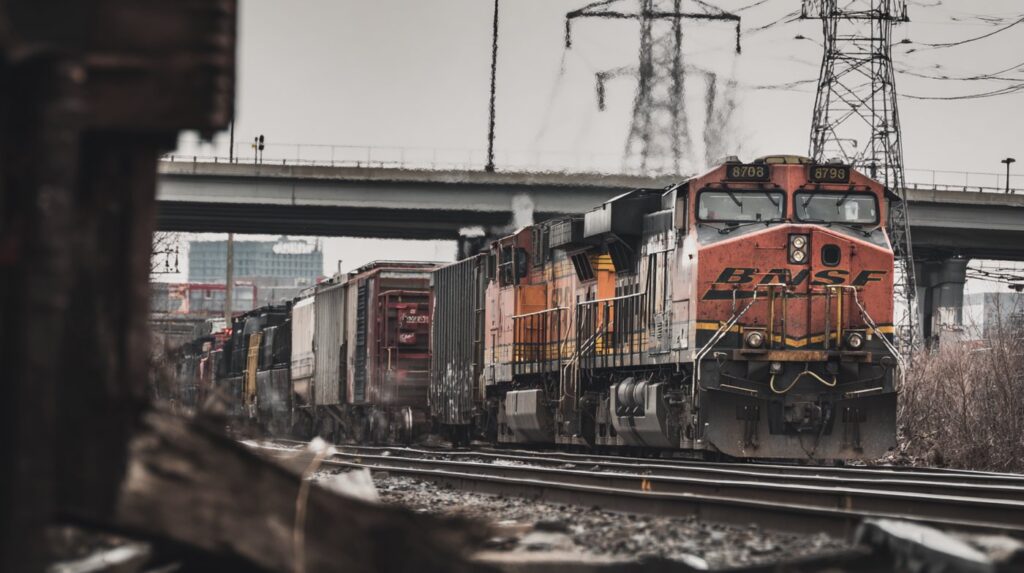
Rail ballast for UPRR and BNSF lines
Road base for county and Caltrans projects
Military-grade builds near Fort Irwin
Erosion control and slope stabilization in flash flood zones
And that’s just a Tuesday.
One Last Thing
We don’t just move rock—we know it. We’ve tested it, stressed it, sourced it from depths that would make your knees ache, and made sure it stands up to every spec sheet and seismic regulation thrown at it.
If you’re sourcing materials for a big project—or even if you’re just curious what kind of rock it takes to keep a road from buckling in the desert heat—talk to someone who lives in the dust and knows what’s under their boots.
Get In Touch!
At Lynx Cat Mountain Quarry in the High Desert, we supply granite that’s as solid as our word.
Give us a call or reach out here to talk materials, specs, and delivery timelines. No fluff. Just rock-solid solutions.
Granite for Erosion Control, Retaining Walls, and Rail Bed Construction
Sometimes the most powerful thing on a job site isn’t the newest machine—it’s a rock that hasn’t moved in 80 million years. There’s a reason so many massive infrastructure projects—from stormwater basins to rail corridors—rely on granite boulders and structural blocks from local quarries. They don’t shift. They don’t rot. They don’t quietly fail after the second rainy season.
Granite Construction Jobs
And when it comes to getting these big, stubborn heroes of geology to the right place at the right time, you want a quarry that understands more than just tonnage. You want one that understands intention.
Why Use Granite Boulders in Large-Scale Construction?
In the three silent granite construction jobs, erosion doesn’t mess around. Neither does rail freight. Whether you’re lining a channel to prevent sediment loss, building a ballast foundation for high-load train traffic, or armoring a slope to withstand seasonal deluge—granite boulders do the heavy lifting.
Unlike lighter aggregates or synthetic materials, granite offers a density and interlock that resists migration, undercutting, and settling.
It’s also naturally inert—meaning it won’t leach, decay, or chemically react with surrounding soils or water tables. The blocks you set today will still be doing their job when the project’s maintenance budget is long gone.
Retaining Walls That Actually Retain
Gravity walls made of massive granite blocks don’t just look impressive—they work. Especially in terrains where soil conditions fluctuate or where engineered fill needs backup. Our blocks at Lynx Cat Quarry are cut and stacked with friction-lock integrity in mind, not just aesthetics.
There’s something satisfying about a wall that doesn’t need reinforcement mesh or backup tie-backs every 10 feet. It just holds. Because that’s what it was made to do.
Ballast, Bedding, and the Importance of Scale
Rail beds demand a very specific type of support material. Too soft, and the tracks flex. Too brittle, and the stone pulverizes under vibration. Granite, when sourced and sized correctly, creates a solid, draining, load-dispersing base that can handle decades of repetitive stress.
Our quarry delivers material in the sizes and volumes required for real-world freight lines—not hobby railroads. And yes, we know the difference. If your supplier doesn’t, that’s a problem you don’t want to find out about mid-project.
Beyond the Boulder: What Working with a Quarry Really Means
It’s not just about what’s in the ground. It’s about who’s standing behind it. Can they scale production? Can they coordinate drop schedules with your crane operator? Can they handle state and county transport requirements without throwing your PM into chaos?
Lynx Cat Quarry was built for high-volume, infrastructure-grade stone production. We’re not a decorative rock shop with a bulldozer. We’re a partner to engineers who don’t have time for guesswork.
Need Help With Your Granite Construction Jobs?
If your job needs granite that actually works like it’s supposed to—boulders that stay put, blocks that hold weight, and a team that understands the scale of your needs—get in touch with us. Lynx Cat Mountain Quarry is here for the big stuff.
Granite has that unapologetic strength and stillness that makes engineers breathe easier and job sites feel solid before a single pour of concrete. When it comes to major infrastructure projects—think bridges, viaducts, harbors, and load-bearing marine applications—nothing quite matches the raw, foundational dignity of a properly quarried, properly cut granite block.
Granite for Marine Construction
At Lynx Cat Mountain Quarry in Southern California, we don’t deal in decorative pebbles. We’re talking monolithic, structure-grade granite that’s been tested by geological time, formed under tectonic pressure, and capable of holding up more than just a retaining wall. These are blocks designed to take the weight—literally—of human ambition.
Understanding Granite’s Natural Superpowers
Granite isn’t just pretty. It’s a dense, coarse-grained igneous rock with high compressive strength and low water absorption.
That means it can handle enormous weight and resist erosion, freeze-thaw cycles, and saltwater degradation. These traits matter when you’re shoring up a coastline or building a span that’s expected to outlast the decade’s infrastructure budget.
Each block quarried at Lynx Cat is a piece of earth’s deep architecture—cut to meet specs, transported with care, and used in structures that demand zero guesswork. Sourcing granite isn’t just a procurement decision. It’s a performance one.
Matching Block to Use Case
Every project type has a sweet spot. For bridge abutments and retaining structures, you want squared, load-bearing blocks with minimal fissures and consistent grain. Marine projects, on the other hand, may require rougher quarried faces that allow for interlock and weight distribution against tides or surge.
We work with civil engineers, architects, and DOT teams to identify the block size, type, and finish that meets each application’s stress tolerance and design requirements. From intermodal transport yards to storm surge walls, we’ve learned that choosing the wrong stone costs a lot more than choosing the right one early on.
Getting It There (And Why That Matters in Marine Construction)
Logistics is where a lot of projects quietly fall apart. Oversized granite isn’t something you toss on the back of a pickup. You need regulated haul routes, proper lifting equipment, and coordination with job site delivery schedules. We’ve invested in getting this part right—because no one needs a 10-ton rock stuck halfway up a hill due to a permitting oversight.
If your supplier can’t answer basic DOT spec questions or show up with the right paperwork, you’re not just risking delays—you’re risking structural failure.
Why This Matters More Than It Seems
Granite blocks aren’t just inert materials. They hold bridges together. They keep rivers where they’re supposed to be. They give people a way across what used to be impassable. The psychological effect of something dependable, unmoving, and well-placed is hard to overstate.
And if you’ve worked in big construction for more than a minute, you know the real strength of a project often comes down to a thousand small decisions made early—most of them invisible later.
Choosing the right quarry is one of those decisions. It means fewer unknowns, fewer reworks, and a little more sleep for the structural team.
Get a Quote From Lynx Cat Mountain Quarry in Barstow California
If you need serious stone for serious work, call us. At Lynx Cat Mountain Quarry, we know what this rock can do—because we’ve seen where it’s gone. And we’ll help you get it there.
We think of dirt as inert. Just the blank stuff beneath our feet. But soil—especially in Southern California, where weather whips between drought and deluge—is an active, reactive participant in everything that sits on top of it. It breathes. It shifts. It has anxieties, if we’re being honest, and when its surface is disturbed or left bare, it panics. Erosion is the visible sign of that panic. Unchecked, it carves gullies through your property and quietly undermines everything you’ve built. But here’s the good news: stabilized decomposed granite, or stabilized DG if you’re in the know, acts like a grounding technique for land that can’t regulate itself.
The Science of Holding Things Together
Stabilized DG is decomposed granite (crushed, weathered bits of granite rock that’s been worn down into a gravel-like consistency) mixed with a stabilizing binder. This isn’t just fancy dirt. It’s engineered to stay put. When laid and compacted properly, the binder helps it harden slightly while still allowing for permeability—like giving the soil its own weighted blanket and a reminder to breathe. It controls runoff, slows water movement, and holds slopes in place. And yes, Lynx Cat Mountain Quarry knows exactly how to provide this stuff in the right proportions because they live and breathe this terrain.
Where Beauty Meets Backbone
Here’s the thing: Southern California doesn’t always get the credit it deserves for being ruggedly vulnerable. One heavy rainstorm, and the charming slope behind your house starts acting like it’s in a Tarantino film. Stabilized DG helps with that. But it’s not just about staying intact—it’s about how well it blends in. It looks natural, feels organic underfoot, and doesn’t scream for attention. You get erosion control and a surface that actually feels like it belongs. Which, let’s be honest, is all any of us really want.
A Tool, Not a Cure-All
Let’s be clear—stabilized DG isn’t the magic answer for everything. It’s a brilliant solution for specific needs: gentle slopes, walkways, driveways, and areas that see foot traffic but not freeway-level punishment. It works best when part of a bigger strategy: proper grading, smart landscaping, occasional maintenance, and yes, occasionally admitting when things need a deeper intervention. That’s true in land management.
When and Why to Choose Stabilized DG
It’s not just about stopping erosion—it’s about how you stop it. Stabilized DG gives you a durable, natural, low-maintenance option for areas that would otherwise be vulnerable.
Keeps dust down in dry climates like Southern California
Great for sloped areas where rain runoff causes soil loss
Ideal for footpaths, plazas, medians, and seating areas
Helps manage stormwater by allowing infiltration
Long-lasting and sustainable with minimal maintenance
Lynx Cat Mountain Quarry: More Than a Rock Supplier
Lynx Cat Mountain Quarry doesn’t just sell rocks. We understand this soil. We know how to read the stress fractures in a hillside, how to deliver just the right blend of material, how to be both strong and kind in how they do business. You can trust us not just because we’ve done this for years—but because we actually get what this land needs.
A Place to Start
If you’ve got land that’s slipping, cracking, or losing its footing, you don’t need to white-knuckle it. Talk to the team at Lynx Cat Mountain Quarry. Stabilized decomposed granite isn’t just a product. It’s a calm, solid place to begin. Call us today: 760-760-5969.
Granite has been here longer than we’ve been drawing up blueprints, humbly offering its shoulders to hold up cathedrals, garden walls, and entire hillsides. It doesn’t demand applause, but if you stop for a moment and really look, it’s downright breathtaking. It’s no wonder granite for retaining walls is the way to go.
Each fleck of quartz, each swirl of feldspar was written under the kind of pressure we can’t even imagine and then left to cool into something solid, enduring, and strong.
When it comes to retaining walls and foundations, granite isn’t just a smart choice—it’s the wise one. It doesn’t crumble under pressure or give up in a storm. It stays.
Granite for Retaining Walls
Granite’s strength comes from its wild origin story, deep under the Earth’s surface, where it’s ingredients were pressed together. What emerged was something stronger than the sum of its parts, ready to take on the world.
Handles the Heavy Stuff: Granite can bear 19,000 pounds per square inch without flinching. That’s a lot of trust you can put in a single stone.
Laughs in the Rain: Rain, snow, heat, wind—granite takes it all in stride, not eroding or breaking down like other materials might.
Ages Well: While other materials crack, warp, and generally fall apart over time, granite simply endures. It weathers life with a kind of grace we could all learn from.
And let’s not forget the beauty of it. Granite is stunning without trying too hard. It doesn’t need polish or pretension—its natural veining and speckling are like fingerprints, unique to each piece, quietly whispering, I’ve been here a while, and I’m not going anywhere.
Granite at Work
Granite’s legacy is etched into some of the most awe-inspiring projects in the world, the kind that stop you in your tracks and make you realize how much we owe to a material that never asked for a thank-you:
Hoover Dam’s Retaining Walls: Concrete might steal the spotlight, but granite is there in the wings, holding steady against time and pressure.
Mount Rushmore’s Bedrock: Granite didn’t just serve as the canvas for this iconic carving—it’s been standing tall for eons, unfazed by the elements.
Coastal Seawalls: In California, where the ocean is relentless, granite is the steadfast sentinel, protecting the shoreline from erosion and fury.
Granite doesn’t show off, but its track record is undeniable. It’s the dependable friend who shows up with a truck when you need to move and doesn’t expect anything in return.
Why Lynx Cat Mountain Quarry is a Treasure
In Southern California, Lynx Cat Mountain Quarry is where you’ll find granite that’s as good as it gets. Here’s what sets it apart:
Close to Home: Locally sourced granite means less time on the road and a smaller carbon footprint, which feels like the right thing to do.
Tough as Nails: Independent testing proves what we already knew—this granite can handle whatever you throw at it.
Beautifully Versatile: Rustic or modern, bold or understated, Lynx Cat’s granite works in any setting.
Whether you’re building a garden wall to keep your lavender from sliding downhill or laying the foundation for something that will outlast us all, Lynx Cat Mountain Quarry has the granite to make it happen.
Let’s Get Started
If you’re ready to build something that matters, something that will stand strong and true long after we’re all gone, get in touch with Lynx Cat Mountain Quarry. We will help you choose the granite that’s right for your project, and together, we will create something solid, beautiful, and enduring—because that’s what granite does best.
Call us today and talk to a real person
about your construction aggregate needs.
The world is changing, and so are the ways we interact with it. Landscaping isn’t just about making a space beautiful anymore—it’s about making choices that respect the earth and our place on it. That’s where decomposed granite comes in.
Simple, honest, and endlessly versatile, decomposed granite has become a quiet hero in eco-friendly landscaping. Here at Lynx Cat Quarry in Southern California, we’ve watched it transform everything from cozy backyard retreats to expansive public spaces. Let’s explore why decomposed granite might just be the humble material that shifts how you think about your outdoor projects.
Decomposed Granite in Southern California: Why It Matters
At its heart, decomposed granite is simply granite rock that’s been weathered into something softer, finer, and more forgiving—much like us after a bit of life. It’s the earth’s way of recycling itself over millennia, breaking down into particles in a range of earthy hues. But there’s more to DG than its quiet beauty.
Sustainable to Its Core: Decomposed granite is a natural material requiring little processing, making it one of the greenest options out there. It’s local, it’s low-impact, and it doesn’t ask for much—just a little love and attention during installation.
Effortlessly Beautiful: Whether you’re envisioning a winding garden path or a smooth patio, DG works with your space, not against it. It settles into the landscape like it’s always belonged there.
Gentle on the Budget: Sourced locally and sold in bulk at places like Lynx Cat Quarry, DG lets you save money without sacrificing quality or sustainability.
DG: An Environmental Ally in Landscaping
Decomposed granite isn’t just kind to the planet—it carries a practical wisdom that feels almost timeless, as if it’s been waiting patiently for us to notice its quiet brilliance. Its permeability is a gift to landscapes, allowing rainwater to seep through naturally, replenishing groundwater and reducing erosion. Unlike rigid concrete or asphalt that battles against the elements, DG works with them, harmonizing with the rain in a way that feels almost miraculous, especially in regions prone to drought or deluge.
Once in place, DG asks for so little in return. It doesn’t demand constant repairs or a never-ending arsenal of chemicals. Instead, it offers a kind of grounded reliability, staying put and sturdy, freeing you up to focus on the things that truly matter. And when landscapes change—as they always do—DG adapts with remarkable grace. Its recyclability makes it easy to move and repurpose, ensuring that every bit of it can find a new home in your evolving plans. It’s a material that doesn’t just endure but transforms, reminding us that sustainability is as much about flexibility as it is about care.
Where Decomposed Granite Fits: Projects Big and Small
One of the joys of decomposed granite is its versatility. It can feel polished and formal or rustic and earthy, depending on how you use it. And there are so many ways to use it.
Pathways and Trails: DG makes paths that are soft underfoot yet durable enough to handle foot traffic gracefully.
Patios: A DG patio is more than functional—it’s a natural extension of your space, blending seamlessly with the environment.
Playgrounds: For a safe, eco-friendly surface, DG offers the perfect balance of softness and sturdiness.
Driveways: With stabilizers, DG becomes a compact, permeable option that holds up to vehicles without turning into a mud pit.
Garden Mulch: Long-lasting and visually pleasing, DG helps retain moisture and keeps weeds in check.
DG’s Role in Large-Scale Projects
Decomposed granite doesn’t stop at small-scale charm. It steps up for the big jobs, too.
Erosion Control: Stabilized DG is a workhorse for preventing erosion, particularly on slopes and tricky terrain.
Foundation Layers: Contractors rely on DG as a base layer for everything from pavers to gravel roads, offering stability and drainage in one.
Public Spaces: Parks and plazas increasingly feature DG for its natural beauty and environmental benefits.
Why Lynx Cat Quarry Should Be Your Go-To
Not all DG is created equal. The quality of your materials—and the people who supply them—matters. At Lynx Cat Quarry, we take pride in offering:
A variety of colors and textures to suit any aesthetic.
Stabilized DG for when your project needs a bit more structure.
Bulk options that keep your costs reasonable without compromising quality.
Let’s Build Something Beautiful Together
Landscaping is about more than shaping the ground—it’s about creating spaces that reflect care, respect, and vision. Whether you’re laying the foundation for a public park or crafting a quiet garden corner, decomposed granite can help bring that vision to life. Lynx Cat Quarry is here to guide you, supply you, and cheer you on every step of the way.
Let’s make something beautiful, one grain of granite at a time. Call us today, and let’s get started.
Call us today and talk to a real person
about your construction aggregate needs.
When you’re staring down the barrel of a major project—whether it’s a backyard revamp, a new building, or even just keeping a town looking and functioning beautifully—one thing is true: you need rock.
Not just any rock, but solid, dependable granite that comes through for you. Every. Single. Day. And sometimes, you need it in bulk. That’s when going straight to the source, a granite rock quarry, can be the smart move.
Bulk rock saves time, headaches, and quite frankly, a lot of unnecessary runs to the hardware store. Sure, the small bags are fine for a little garden touch-up, but once you’re handling anything bigger—paths, roads, or drainage systems—you’re in for a world of frustration if you don’t opt for bulk.
You don’t want to piece together something that’s meant to last with anything less than the real deal.
Why Bulk Granite Rock Matters
Maybe you’re asking yourself why you’d go the bulk route. Isn’t it overkill? Big projects, whether it’s building a foundation, creating a park, or putting in a water management system, is going to need stability and durability. That’s where bulk granite comes in.
Construction Projects
You can’t build a road, a parking lot, or anything else that people will rely on without the sturdy backbone that granite provides.
It’s literally the foundation that everything else rests on. If you’re building for longevity, you need bulk granite rock to make sure your work holds up under whatever life throws at it.
Landscaping
Maybe it’s a park, maybe it’s a corporate space, or maybe it’s your dream backyard. You want something beautiful but tough—something that can hold its own against the elements while staying low-maintenance. Bulk granite rock is what turns that vision into reality.
Water Management Systems
Granite has this incredible ability to deal with water—drainage, erosion control, you name it. And when you’re talking about managing water on a large scale, you’re talking about needing a lot of it.
Using a Granite Rock Quarry
Going directly to the quarry? It’s a good move for bulk granite rock, and here’s why:
You Know What You’re Getting: No surprises. You get rock that’s straight from the earth, no middleman, no mix-ups. The quarry takes care of it from start to finish, and that kind of control means consistent, high-quality granite for you.
It’s Cost-Effective: Forget paying for all the markup from the guy who bought it from the quarry. When you go direct, you save money. Plus, you can get exactly what you need, in the size and amount that suits your project best.
It’s Local: Buying from a local quarry cuts down on the environmental impact of shipping from far-off places. Supporting local also means you’re keeping your community strong and investing in the businesses around you.
Real-Life Situations Where Bulk Granite Rock Makes Sense
Urban Development: Cities need solid foundations—literally. Bulk granite goes into roads, retaining walls, sidewalks, and just about every other public works project that people rely on every day.
Commercial Landscaping: Think of all the stonework you see around hotels, office parks, and shopping centers. That’s granite in bulk doing its job, standing tough and looking good.
Home Projects: Maybe you’ve got a few acres, and you’re building a driveway or adding some dramatic rock features. Bulk rock is what makes that project go from idea to reality—efficiently and beautifully.
Why Staying Local Matters
Choosing a local rock quarry in Southern California isn’t just about proximity, though that’s a big plus. It’s about investing in your community, supporting businesses that keep the economy flowing, and ensuring you get what you need quickly and reliably.
Local means fewer delays and better service, plain and simple.
Whether you are looking for building stone for foundation work, cladding, flooring, fireplaces, or even monuments, you want it to be strong and, in some cases, look good, too. Choosing granite for your building stone is always a good move. Building stone providers, such as Lynx Cat, that offer granite offer strength and versatility.
Rock Quarry as Your Building Stone Providers
If you are in Southern California, Lynx Cat are the trusted building stone providers. One of the reasons is a high-quality stone that exactly meets your project specs. Here are some other reasons people come to us as their building stone providers:
Quality Assurance: Lynx Cat provides direct access to high-quality granite, ensuring consistency and reliability in the stone’s properties.
Cost-Effectiveness: Purchasing granite directly from a quarry can be more economical than buying through intermediaries.
Sustainability: Quarries often follow sustainable practices, ensuring the extraction process is environmentally friendly.
Talk to a real person: When you call us, our on-site team will answer. We give you all the info you need because we are the ones doing the work.
Why Granite for Building Stone?
Granite continues to be a top choice for builders worldwide due to its exceptional qualities. Here’s an in-depth look at why granite stands out:
1. Strength
Granite is one of the hardest natural stones available, ranking around 6-7 on the Mohs scale of mineral hardness. You can use this strength in a town square or to support a skyscraper. It can handle the weight and stress without cracking or breaking.
2. Durability
The biggest detriment to lasting projects is weathering. Granite is the best at handling outdoor life. Extreme temperatures, rain, snow, sleet, and all of it—granite takes what nature throws at it. If you want something that will last centuries, granite is the way to go.
3. Aesthetics
Just look at it. It’s a piece of art. Elegant whites and greens, oranges and grays. It looks good. Each piece is like getting a custom-made sculpture. You can polish it for elegance or leave it rough for a look that withstands hundreds of years. It works for both modern and classic designs.
4. Versatility
Granite’s versatility is another significant advantage. It is suitable for a wide variety of construction applications, including:
Exterior Cladding: Provides a sleek and durable finish to building exteriors.
Interior Flooring: Adds elegance and longevity to interior spaces.
Countertops: Ideal for kitchens and bathrooms due to its resistance to stains and scratches.
Paving and Landscaping: Perfect for outdoor areas, including driveways, walkways, and patios.
Non-Porous Nature
When we talk about the pores in granite, it’s a short conversation: there aren’t any. Okay, that’s a little misleading. It has one of the smallest amounts of pores. Pores are the presence of tiny holes within a material where liquids or gases can pass. Granite, a non-porous material, has a very low level of porosity, meaning it has few if any, tiny holes.
It can resist moisture and stains, and it is very strong.
Granite’s structure consists of tightly interlocked crystals of minerals such as quartz, feldspar, and mica. These crystals are very dense and reduce the rock’s pores.
Get Top-tier Granite Today
Granite building stone providers offer the best option for your construction project if strength, versatility, and aesthetics are important.